ServicesSolar Repair
Solar Repair in Hurst
When production drops or the inverter shows a fault, we find the cause at the part level: a failed microinverter, a cracked cell, a burned connector. If hail did the damage, we document it so your insurance claim starts with clear evidence instead of guesses.
What solar repair covers and when it's the right call
A solar system usually fails one component at a time. An inverter trips on a ground fault, a single MC4 connector corrodes and opens the string, or a squirrel chews through PV wire under the array. Your monitoring app shows a dip or a flat line, but it rarely tells you why. Our job is to find the specific failure, explain what caused it, and replace only what is actually broken.
Repair makes sense when the panels, racking and most of the electronics are sound. If a large share of the modules are cracked or the system is old enough that parts are no longer made, we tell you that plainly and walk through whether a partial rebuild or new solar panel installation is the better use of your money.
After North Texas hail, many repair calls are really insurance questions. We photograph damage panel by panel, record serial numbers and test results, and explain how the claim usually moves. We don't act as your adjuster and we won't promise what a carrier will pay.
What a repair visit includes
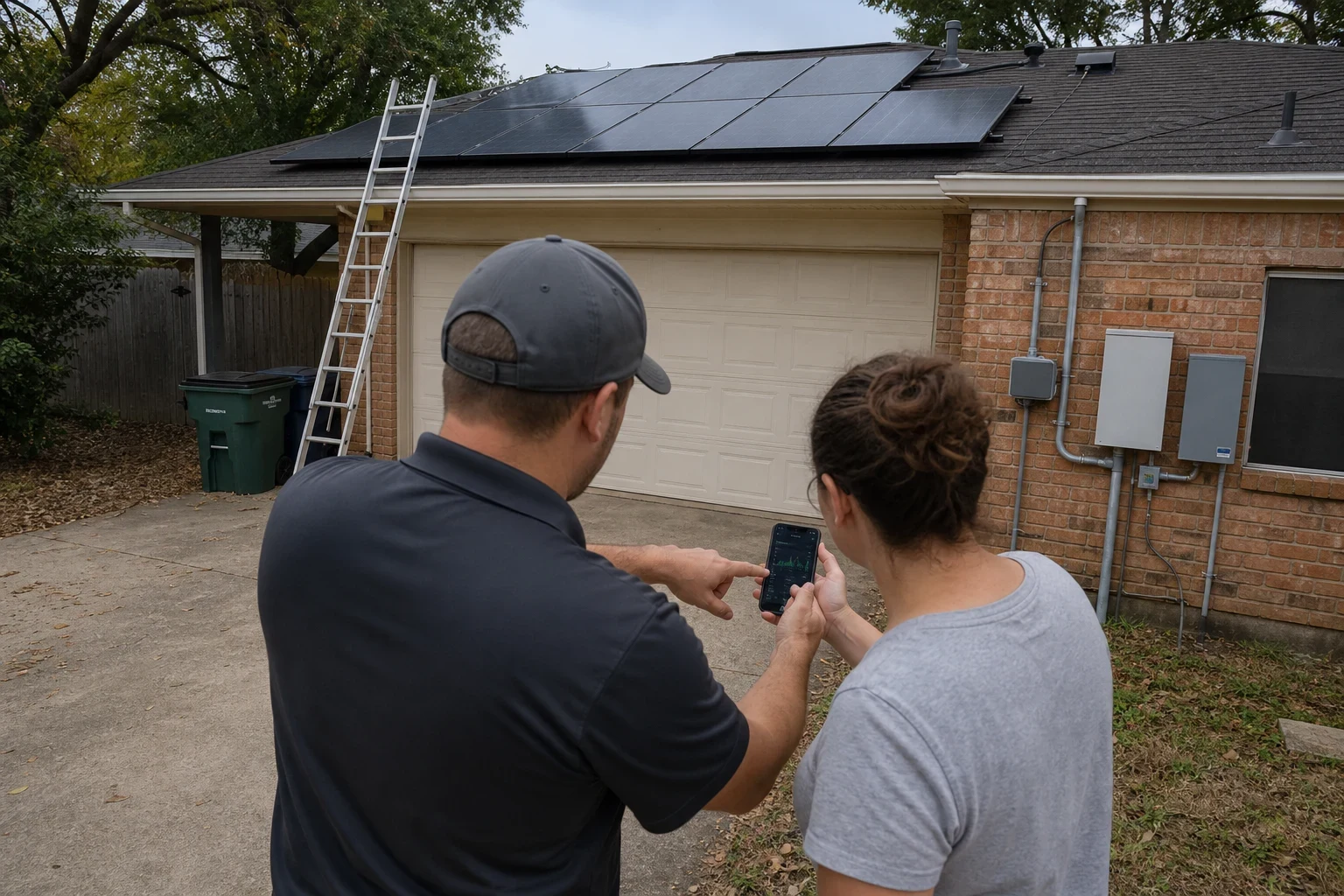
Monitoring and inverter review
We start with your monitoring data and the inverter's fault log. A ground fault, an arc fault or a string reading low voltage each point to a different part of the system, which keeps the search short.
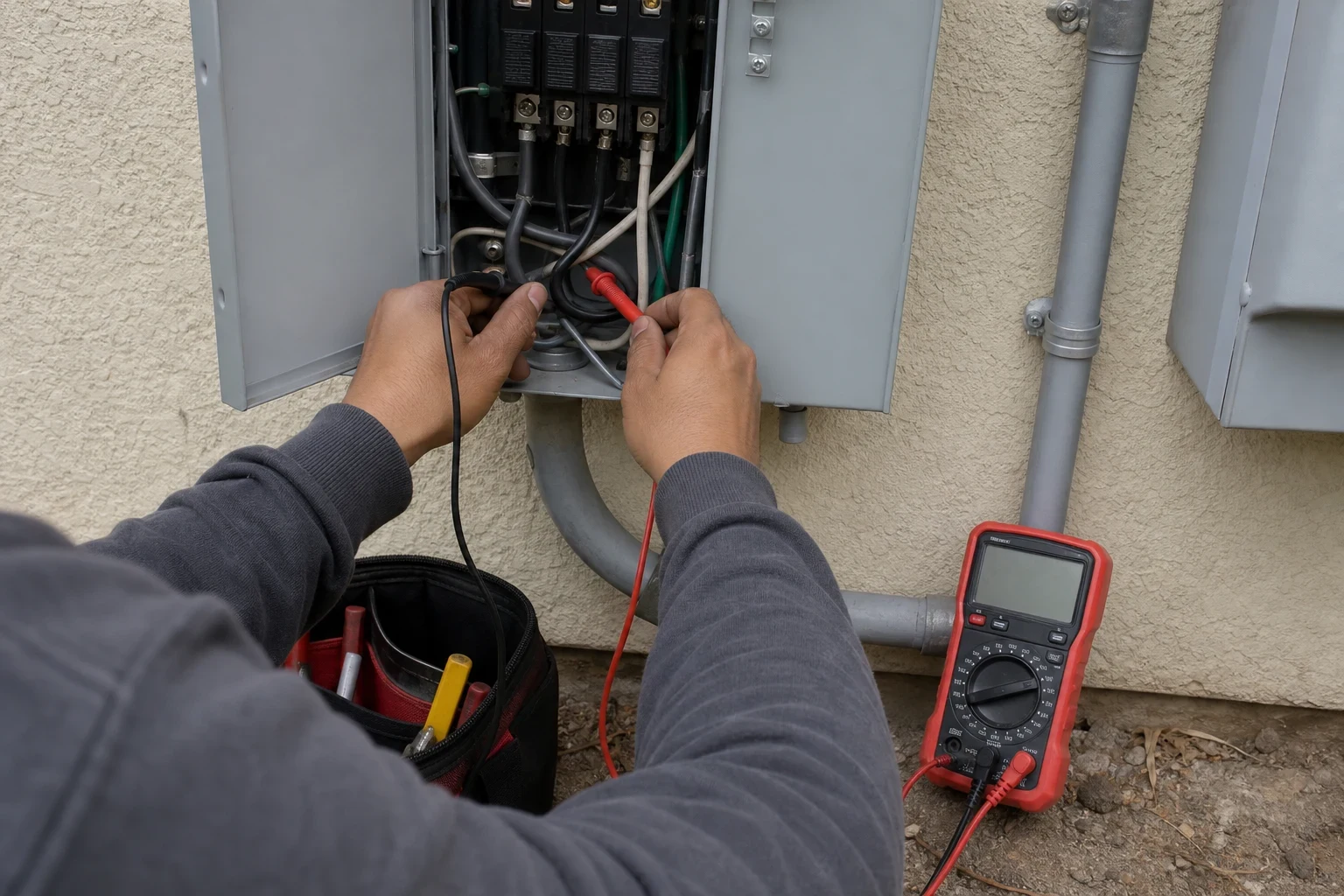
Electrical testing at the string
We measure open-circuit voltage and current on each string and compare them to the module specs. A string that reads low tells us a panel, diode or connector is failing before we climb anything.
Panel and connector inspection
On the roof we look for cracked glass, browned or delaminating cells, burn marks at junction boxes and loose or melted MC4 connectors. Wire management gets checked too, since PV wire left touching the roof surface wears through over time.
Part replacement and retesting
We swap the failed component, whether that's a microinverter, optimizer, module or connector pair, then retest the string and confirm the inverter reports normal production before we leave.
Damage documentation
Every damaged part gets dated photos, a serial number and a short note on what failed and why. You receive the full set to keep or pass to your insurance company.
Signs your system needs repair
- Production fell and stayed down
- A dip on cloudy days is normal. A drop that holds through clear, sunny weeks usually means a string or inverter has stopped contributing.
- Red or amber light on the inverter
- Most inverters show a status light and a code. Write the code down or take a photo; it saves time on the call.
- Panels show up gray in the app
- On microinverter and optimizer systems, a single panel reporting zero often means a failed unit under that module, not a bad panel.
- Visible cracks after a storm
- Hail can shatter tempered glass or leave fine cracks you only see at an angle. Cracked panels let in moisture, which leads to hot spots and further loss.
- Chewed wire or nesting under the array
- Squirrels and birds like the shaded gap under panels. A gnawed wire jacket exposes bare copper, which is a fault and fire risk, and it's worth fixing before it trips the system.
How a repair job runs
- 1
Phone conversation first
You tell us what the app and inverter show, and when it started. If a storm came through, we note the date so it lines up with your claim.
- 2
On-site diagnosis
We test from the inverter outward to the strings, then inspect the array. You get a clear answer on what failed and what caused it.
- 3
Written estimate with photos
Before any parts are ordered, you see a line-item estimate and the photos behind it. If damage looks storm-related, we explain what your insurer will likely want to see.
- 4
Repair and system check
We replace the failed parts, secure loose wiring, retest each string and confirm production in your monitoring. If we spot roof damage under the array, we photograph it so you can take it to a roofer.
What moves the cost of a solar repair
Most of the price comes from the part that failed and how hard it is to reach. We give you a written estimate after diagnosis, so the number is based on what we found rather than a guess over the phone.
- Which component failed
- A connector pair is a small part. A string inverter or several replacement modules cost far more, and matching an older module model can take some searching.
- Location in the array
- A microinverter at the edge of the array is quick to reach. One in the middle may mean pulling several panels to get to it.
- Roof pitch and height
- Steep or two-story roofs take more safety setup and more time on every trip up and down.
- How many parts are affected
- Hail rarely damages just one panel. The number of cracked modules or failed units has the largest effect on a storm repair.
Solar repair questions
- Will my homeowners insurance cover hail damage to my panels?
- Many policies treat roof-mounted panels as part of the dwelling, so hail damage is often covered, minus your deductible. Coverage depends on your policy, and the adjuster makes the call. What we can do is give you dated photos, serial numbers and test readings that show exactly what was damaged.
- Should I file a claim before or after you inspect?
- Reporting the storm date to your insurer early is usually wise. Having our inspection before the adjuster visits helps, because you'll know which panels are damaged and can point to them. We're glad to explain what we found to the adjuster if you ask.
- Can one bad panel take down the whole system?
- On a string inverter system, yes. Panels are wired in series, so one failed module or open connector can drop the whole string. On microinverter or optimizer systems, usually only that panel stops producing.
- Do you repair systems another company installed?
- Yes. We work on systems regardless of who installed them. Older equipment may need a compatible substitute part, and we'll tell you before ordering if an exact match isn't available.
- Could dirt be causing my production loss?
- Heavy dust and bird droppings do cut output, but they rarely cause a fault code or a panel reading zero. If testing shows the hardware is fine and the glass is just dirty, we'll say so and point you to panel cleaning instead of selling a repair.
Find out what failed and why
Tell us what your inverter and monitoring app are showing. We'll set up a visit, test the system and give you a written estimate with photos you can use for an insurance claim.