Hurst, TX
Solar Installation and Repair in Hurst, TX
We design and install solar panel systems, add battery storage, repair failed inverters and wiring, and clean panels for homeowners in Hurst, Euless and Bedford. After a storm, we inspect your array, photograph every cracked module and damaged connector, and explain plainly what an insurance claim can and cannot cover.
- BBB Accredited, A+ rating
- Photo-documented inspections
- Written line-item estimates
- Straight repair-or-replace answers
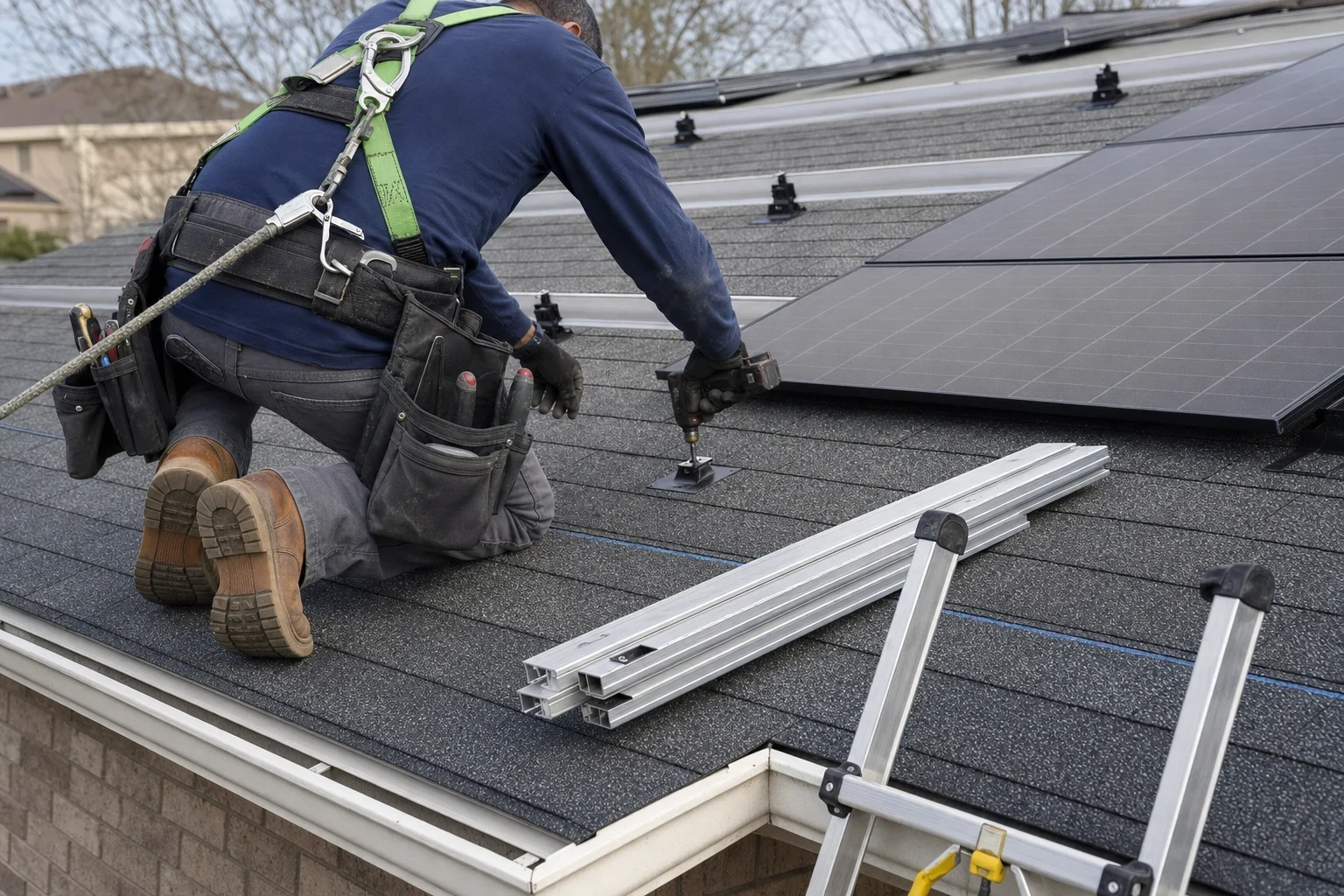
Solar Services for Your Home
Our work covers the whole life of a residential system: solar panel installation, roof-mounted solar on existing roofs, battery storage, solar repair and panel cleaning. Each job starts with the same thing, a close look at the modules, racking, wiring and inverter so we know what is actually there. New systems are sized from your utility bills and roof layout, not from a sales target. Repairs start with testing, because a production drop can come from a shaded string, a failed microinverter or a loose MC4 connector, and each one is fixed differently.
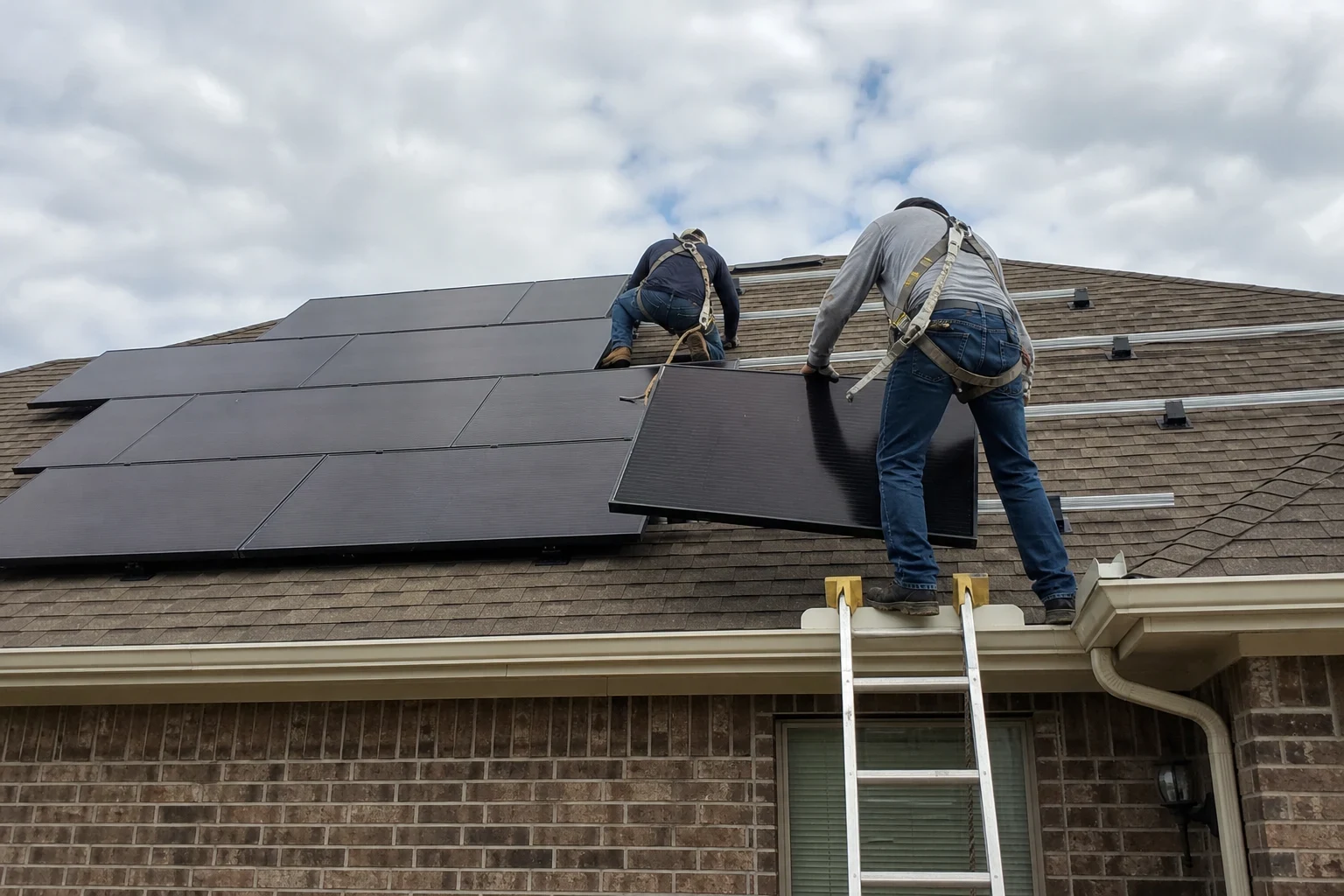
Solar Panel Installation
Rooftop solar designed from your actual electric usage, mounted with flashed attachments, wired with rapid shutdown and taken through permit and utility approval.
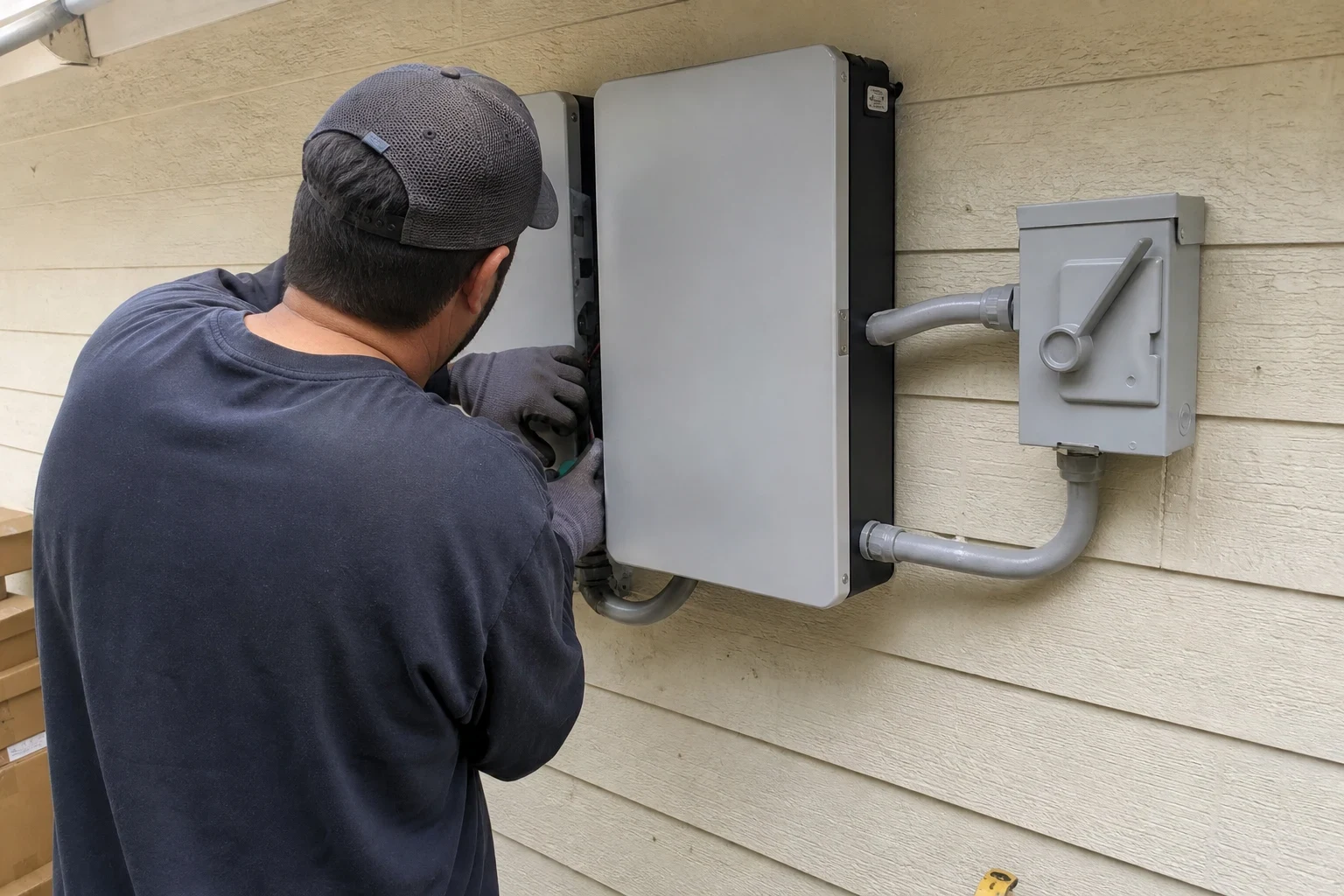
Battery Storage
Lithium iron phosphate home batteries sized to your actual loads, wired through a backup gateway, permitted and set up to work with your solar.
Solar Repair
We trace why your system stopped producing, fix the failed part, and photograph hail or storm damage so your claim has clear evidence.
Panel Cleaning
Gentle, spot-free cleaning of your solar array with purified water, plus dated photos of any cracked glass or hail marks we find along the way.
Roof-Mounted Solar
Panels mounted on your existing roof with flashed attachments lagged into rafters, sealed penetrations and an array laid out around vents, valleys and shade.
What Sets the Price of Your Solar Job
Every roof, electrical panel and power bill is different, so every system is priced differently. Below are the things that raise or lower your estimate. We go over each one with you, so the final invoice holds no surprises.
Once we have looked at your roof and electrical setup, you get a written estimate with every part and task on a separate line. Call to get started and get your quote by phone.
- Equipment and system size
- Module count, wattage and inverter choice all affect price. Microinverters and DC optimizers cost more at the start than one string inverter, but they cope better with partial shade and make faults easier to find.
- How the roof is laid out
- Steep slopes, several roof planes and two-story eaves call for more time and safety setup. The roofing material also decides which mounting hardware goes on each attachment.
- Room in your electrical panel
- Some older main panels are not rated to take a solar backfeed breaker. A panel upgrade or line-side tap raises the cost, and we let you know early if your home needs one.
- Adding a battery
- A battery adds the unit itself, a critical-loads subpanel if you want certain circuits backed up, and the wiring that connects them.
- State of the existing equipment
- Repair pricing follows what the testing turns up. A loose connector is quick to fix, while corroded wiring across a whole string or a dead inverter needs more parts and labor.
- Permits and utility sign-off
- New systems and some repairs require a city permit, an inspection and interconnection paperwork with your utility. Those fees and steps are already in the estimate.
How a Job Runs
Most jobs follow the same four steps, whether we are installing a new array or tracking down a fault in an old one.
- 1
Phone conversation
You tell us what is going on: high bills, a drop in production, storm damage or interest in a new system. We ask about your roof, your utility bills and any monitoring data you have.
- 2
On-site inspection
We check modules, racking, conduit, connectors and the inverter, and test string voltage where a fault is suspected. For storm damage, we photograph each finding and log where it sits on the array.
- 3
Written estimate and plan
You get a line-item estimate and a plain explanation of what we found. If an insurance claim is involved, we give you the documentation and explain the usual next steps with your carrier.
- 4
Work, inspection and cleanup
We pull any required permit, complete the work, and schedule the city inspection when one applies. Before we leave, we confirm the system is producing, show you the monitoring readings and clear the site.
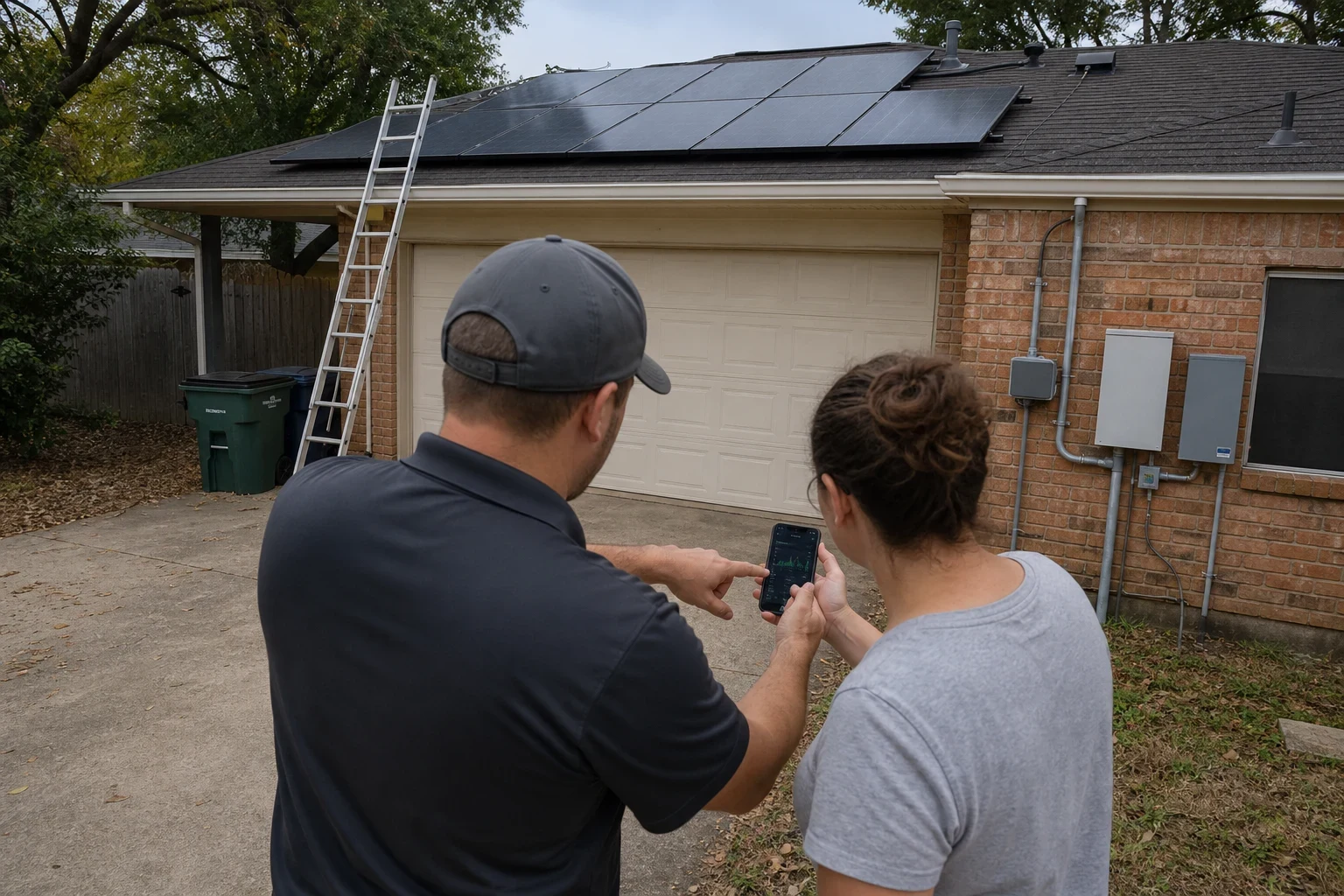
How We Work on Your System
Solar problems are often invisible from the ground. We find them, show them to you and tell you what they mean before anyone talks about cost.
Damage documented before anything else
Hail can leave tempered glass looking fine while the cells underneath carry microcracks that cut output over the following months. We photograph each affected module, note its position on the array and record production readings, so you have clear evidence to hand your insurer. We explain how the claim process usually works, but your adjuster makes the coverage decision, not us.
Accountable after the job
We are BBB Accredited with an A+ rating, and we keep that standing by doing what the estimate says and answering for our work after the crew leaves.
Line-item estimates you can check
Every estimate lists modules, inverters, racking, wiring, permit fees and labor as separate lines. If an insurer or a second contractor wants to compare, the numbers are easy to follow.
Repair when repair is enough
A single cracked panel or a burned connector does not mean you need a new system. If a fix restores the array, that is what we recommend, and we tell you when replacement makes more sense and why.
Careful on your roof
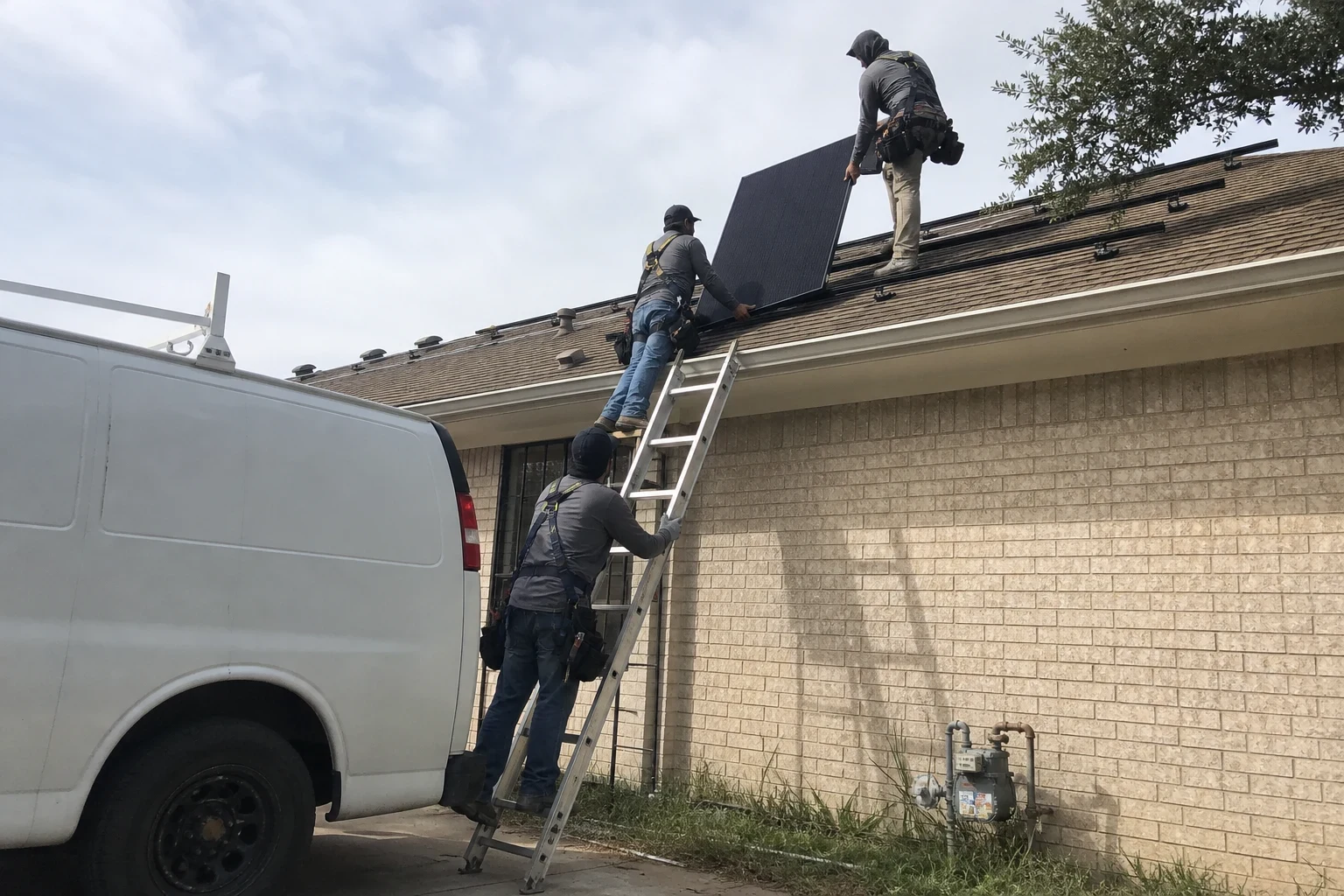
Our crews walk on designated paths, protect landscaping below the work area and seal every penetration at the mounts. When we leave, the debris, packaging and old hardware leave with us.
About Hurst Solar Installation
Hurst Solar Installation is a local solar company working on homes across Hurst and the surrounding area. We install new systems, add batteries and keep existing arrays producing. Solar is the whole job, from the first attachment on the roof to the last breaker in the panel.
A lot of our calls come after spring storms, when hail has passed through and a homeowner is not sure whether the panels took damage. We would rather give you an accurate picture than a hopeful one. That means photos, production numbers and an honest read on whether the damage is likely to matter, so you can decide what to do with your insurer on solid ground.
Where We Work
We are based in Hurst, TX and work on homes throughout the nearby Mid-Cities and northeast Tarrant County. That includes North Richland Hills, Euless, Bedford, Haltom City, Colleyville, Watauga, Richland Hills and Keller, along with Arlington and Grapevine.
- Hurst
- North Richland Hills
- Euless
- Bedford
- Haltom City
- Colleyville
- Watauga
- Richland Hills
- Arlington
- Grapevine
- Keller
If your home is near these towns and you are not sure whether we cover it, ask us on the phone and we will give you a straight answer.
Questions We Hear Often
Something not covered here? (817) 631-6036
How can I tell if hail hurt my solar panels?
Shattered glass is easy to spot, but hail often leaves microcracks in the cells that cannot be seen from the yard. Watch for lower production in your monitoring app or one string trailing the rest. We check each module up close, test its output and photograph what we find.
Does homeowners insurance cover damaged panels?
Many policies include roof-mounted solar with the dwelling, but coverage, deductibles and depreciation differ from one policy to the next. We cannot promise what your insurer will approve, and we are not your adjuster. We give you clear records of the damage and a line-item repair estimate to include with your claim, and we are happy to go through both with you by phone.
What should I do once a hailstorm passes?
Do not climb onto the roof. From the ground, take dated photos of the array and any hail in the yard, and compare output in your monitoring app with the days before the storm. Find your policy's deadline for reporting damage, then call us so we can inspect the panels and record what we see.
Is it better to repair or replace my system?
That turns on what broke and how old the equipment is. One cracked module, a bad connector or a single failed microinverter is usually worth fixing. When several parts are failing on an older system, or matching parts are no longer available, we explain why a bigger replacement may be money better spent.
How often do solar panels need cleaning?
Dust, pollen and bird droppings collect on the glass and can lower output, most of all on low-pitch roofs where rain does a poor job of rinsing. A cleaning once or twice a year suits many homes. We use soft brushes and purified water, avoiding the scratches and mineral spots that pressure washers and tap water can cause.
Can my current system take a battery?
In most cases, yes, though how it is done depends on your inverter. Some systems use an AC-coupled battery with a separate inverter, and others can link a battery more directly. We look at your equipment and electrical panel first, then lay out the options.
Does solar work require a permit?
New systems and added batteries usually need a city permit, an inspection and approval from the utility to interconnect. Our job includes the permit paperwork and scheduling the inspection.
Find Out What Your System Needs
Tell us about your panels, your bills or the storm that came through. We will explain what an inspection involves and what happens next.