Solar Service Areas In and Around Hurst
We install, repair and clean residential solar, and add battery storage, in Hurst and the towns around it. Every visit follows the same method. We inspect the array, photograph what we find and explain the cause in plain terms before any work is scheduled.
Hurst and the Towns We Cover
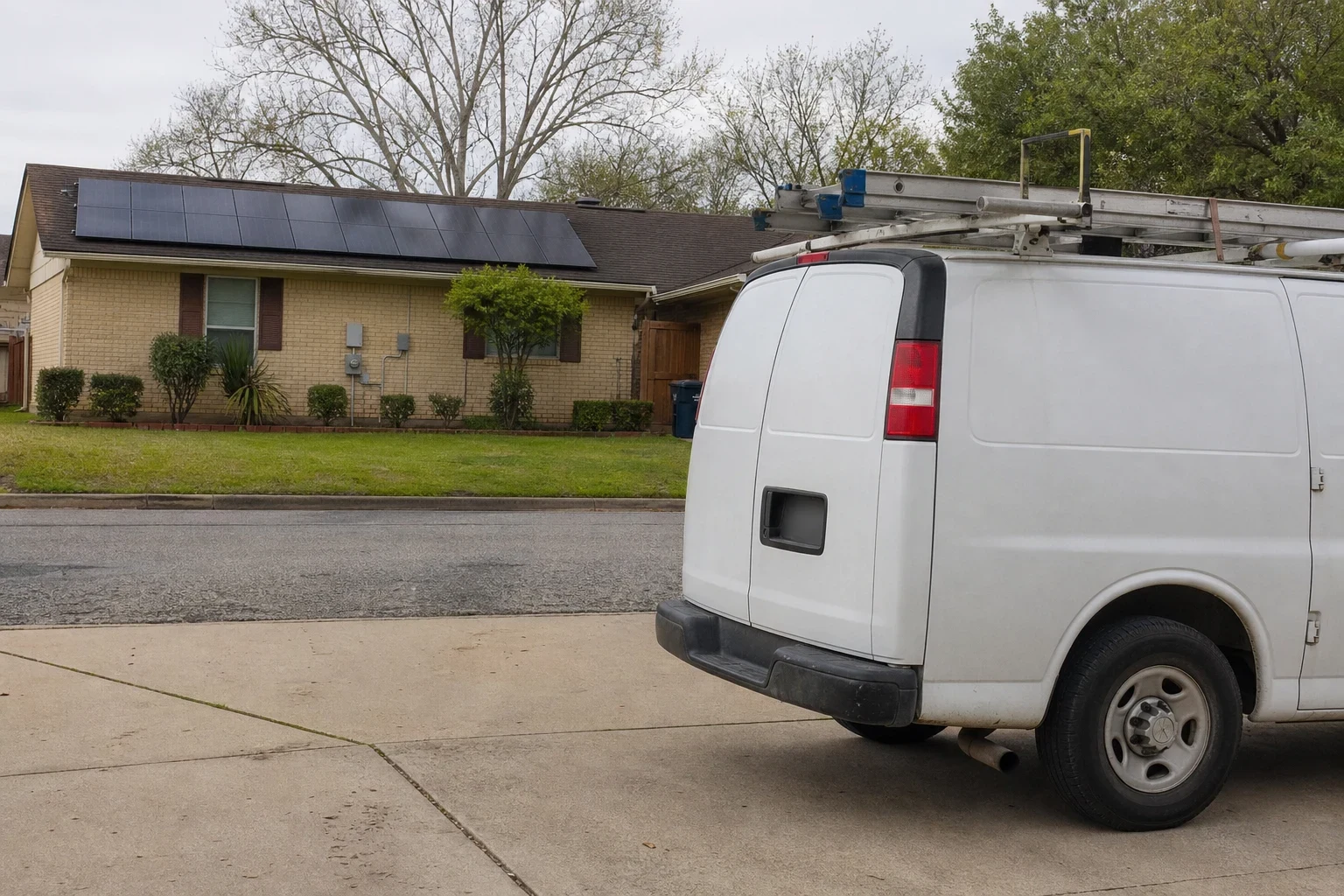
Our base is Hurst, and most of our work is a short drive from it. That includes North Richland Hills, Euless, Bedford, Haltom City, Richland Hills and Watauga, where we handle new solar panel installation, roof-mounted solar on existing homes and solar repair on systems another company put in. Short drives mean we can come back for a follow-up inspection after a storm without it becoming a day-long trip.
We also work in Colleyville, Keller, Grapevine and Arlington. Homes there range from older ranch houses to newer two-story builds with complex roof lines, and that changes how we lay out rails, place attachments and run conduit. If you are not sure your street falls inside our area, ask when you call and we will give you a straight answer.
Towns we cover from Hurst
- Hurst
- North Richland Hills
- Euless
- Bedford
- Haltom City
- Colleyville
- Watauga
- Richland Hills
- Arlington
- Grapevine
- Keller
Not on the list? Call (817) 631-6036 and ask.
What Shapes Solar Work Across the Area
- Hail and storm damage
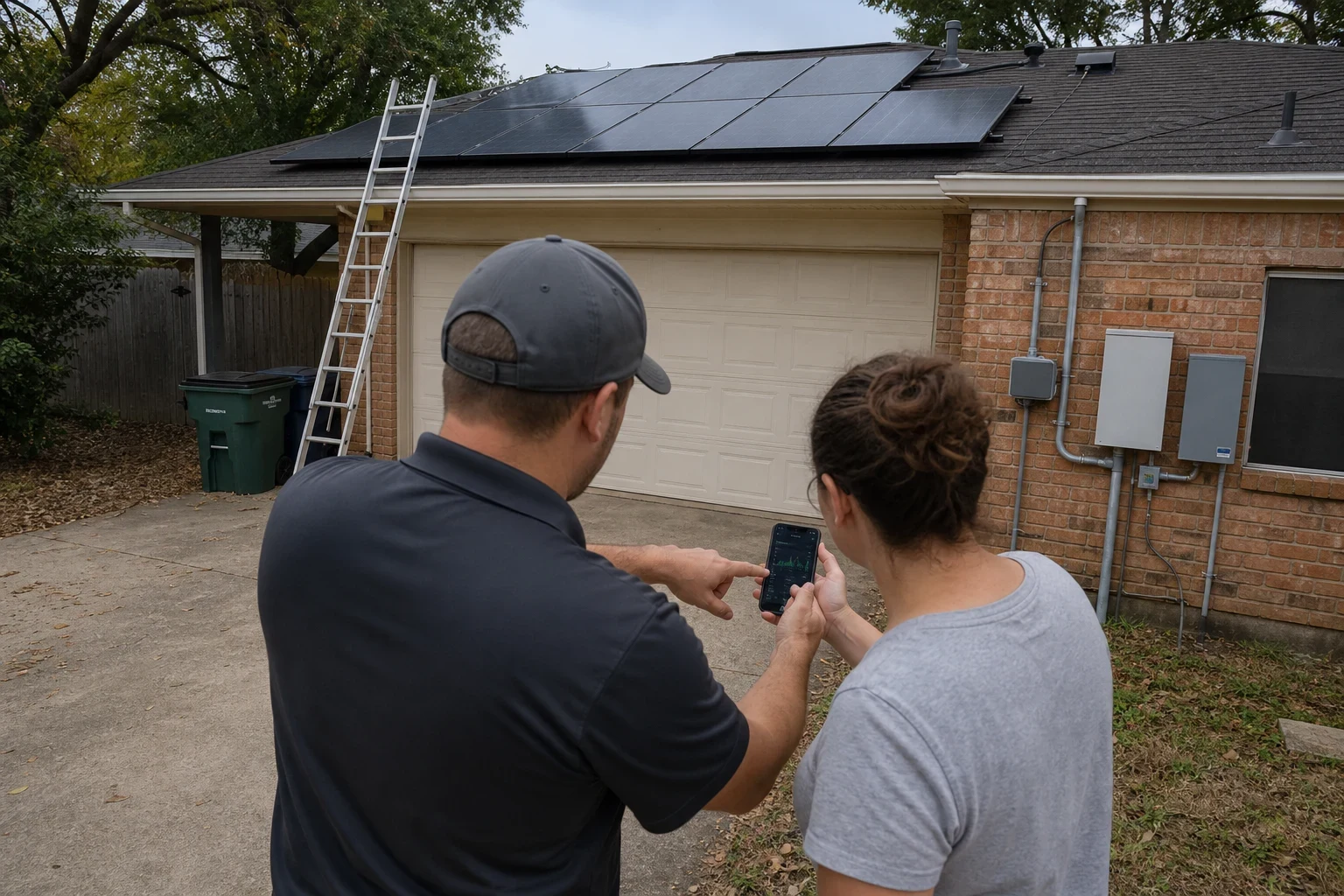
- North Texas spring storms bring hail that can crack the tempered glass on a module, dent the aluminum frame or leave microcracks in the cells that only show up as lost output weeks later. After a storm we photograph each panel, record serial numbers, pull inverter or optimizer data to spot production drops and write down what we see. That record helps when you file with your insurer. We explain what an adjuster usually looks at, but the coverage decision is theirs, and we will not tell you a claim is a sure thing.
- Summer heat
- Long stretches of high-90s weather push module temperatures far higher, which lowers voltage and output in the hottest hours. Heat also ages connectors, cable jackets and inverter electronics. During repairs and cleanings we check MC4 connectors for browning, look for loose wire management that lets cables rub on shingles and confirm the inverter has room to shed heat.
- Housing age and roof types
- Much of the housing here was built from the 1960s through the 1990s, with newer construction mixed in. Most roofs are asphalt shingle over plywood or older plank decking. Before mounting anything we check decking condition and rafter spacing so each flashed attachment lands in solid framing. When a roof looks like it has only a few good years left, we say so during the site visit, because the whole array would need to be taken down and reset once that roof is replaced.
- Permits, HOAs and utility approval
- Each city runs its own building permit and electrical inspection, and the steps differ slightly from one to the next. We pull the permit, prepare the plan set and one-line diagram, and meet the inspector on site. Interconnection with your electric utility is a separate approval that has to clear before the system is switched on. Texas law limits how far an HOA can block solar, but many still review panel placement, so we help you prepare that submission.
Find Out If We Work on Your Street
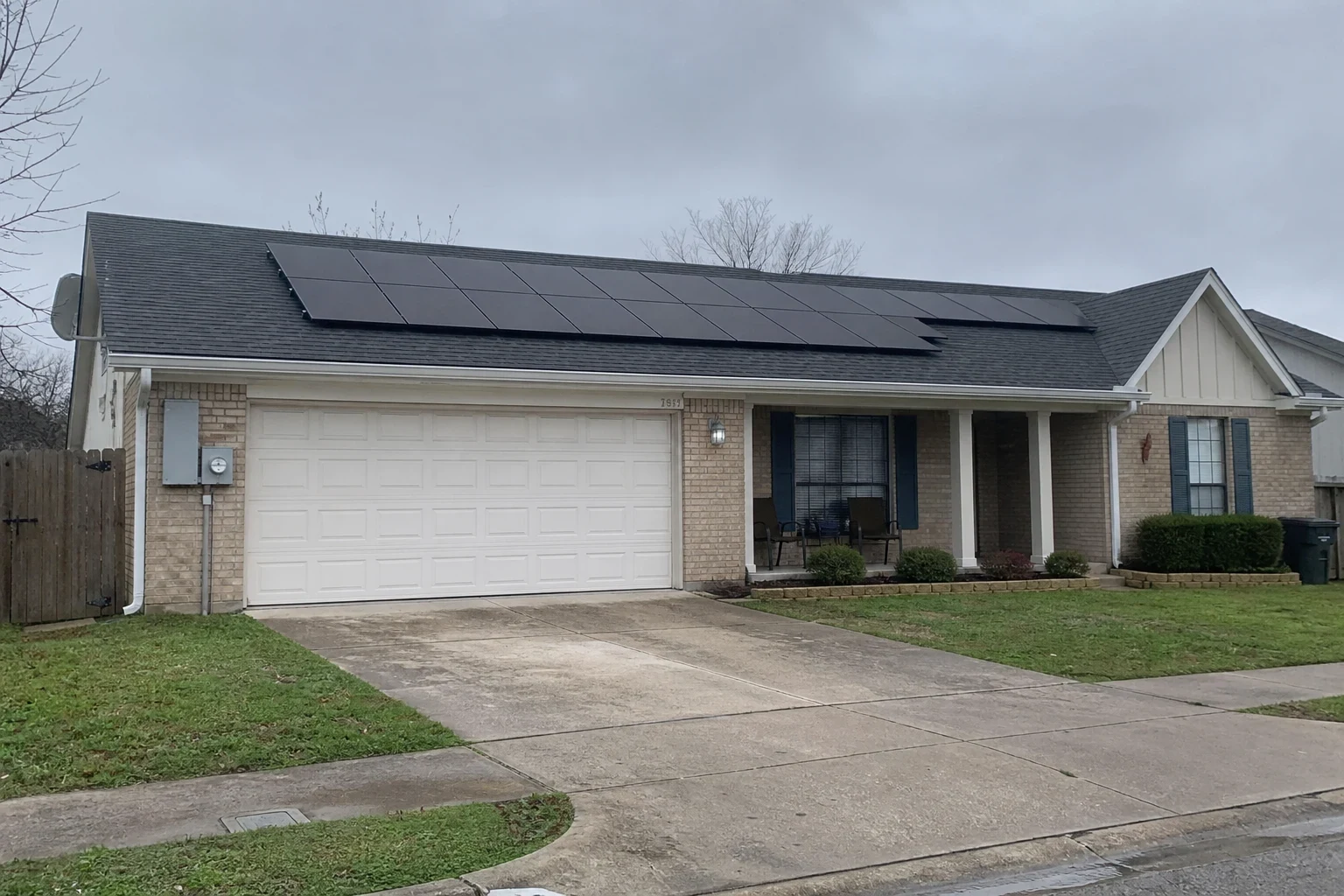
Tell us your town and what is going on with your system, from a new install to storm damage you want documented. We will explain the next step and when we can come out to look.