A Solar Company That Shows You What It Found
We install, repair and maintain solar systems for homeowners, and we work from evidence. Before we recommend anything, we photograph the array, test the strings and write down what we measured, so you see the same facts we do and can decide what your home actually needs.
How We Work on Your Home
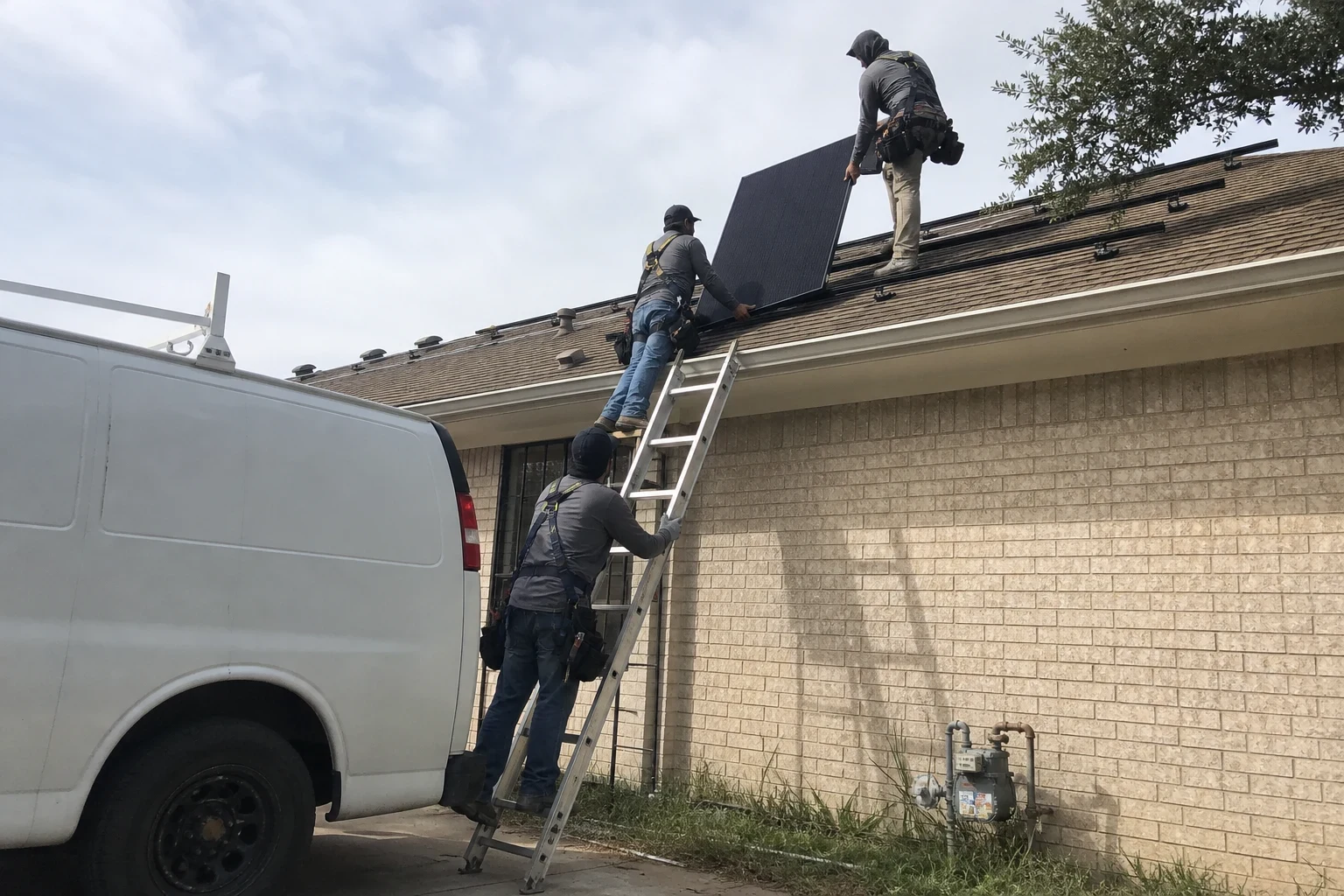
Every visit starts with measurements, not opinions. We check each string's open-circuit voltage against the panel's rated spec, read the inverter's fault history and compare recent production to earlier months. On the array itself we look at the glass, the frames, the racking rails, the sealed mounts and the conduit runs. A string that reads low usually points to a specific cause, such as a cracked cell, a burned MC4 connector or a failed bypass diode, and we want to find that cause before anyone talks about parts.
Storm damage is where careful records matter most. Spring hail across North Texas can crack tempered panel glass outright, but it can also leave microcracks you cannot see from the ground that only show up later as a slow drop in output. When we inspect after a storm, we take dated photos of each damaged module, record serial numbers and pull production data from before and after the event. We explain what an adjuster typically asks to see and hand you an organized set of records. We do not act as your adjuster, we do not tell you what a claim will pay, and we never promise an approval.
Then you get a straight answer on repair versus replacement. Sometimes a dirty array or one loose connector explains the whole problem, and panel cleaning or a small solar repair is all it takes. Sometimes a module or inverter has reached the end of its life. Either way, the estimate is written line by line so you can see what each part and task covers.
What You Can Expect From Us
Photos before recommendations
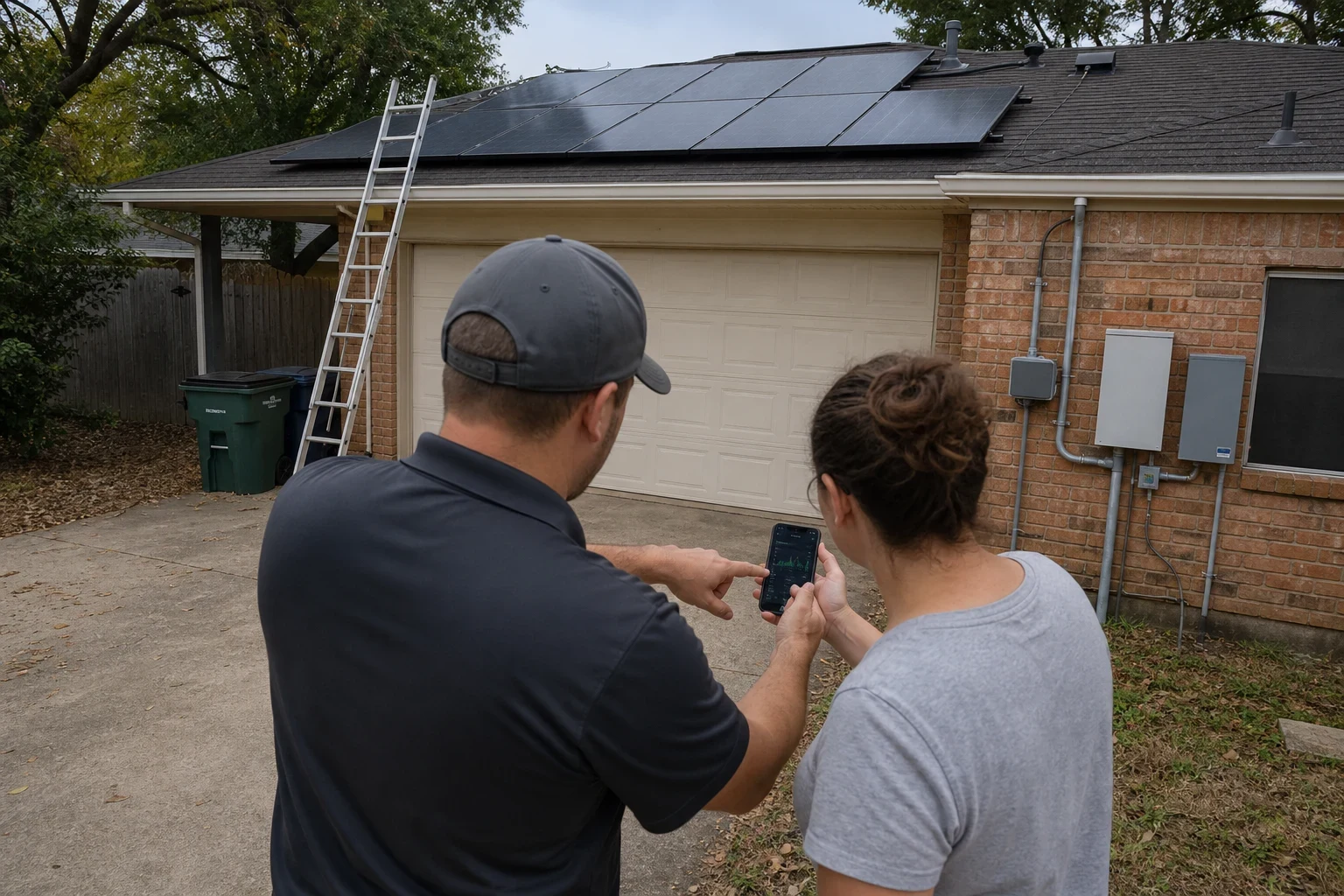
You see what we saw. Close-up photos of cracked glass, scorched connectors or loose racking come with every finding, so a recommendation never rests on our word alone.
Claim records, not claim promises
We document damage thoroughly and explain how the process usually runs. Decisions about coverage belong to your insurer, and we say so plainly.
Line-item estimates
Panels, inverters, batteries, wiring, permits and labor are listed separately. If the scope changes after we open a junction box or lift a module, we show you why before the number moves.
A protected, clean site
We keep ladders and gear off planting beds, collect wire clippings and stray hardware, and walk the yard before we leave. Your home should look the way we found it, plus a working system.
Where We Work
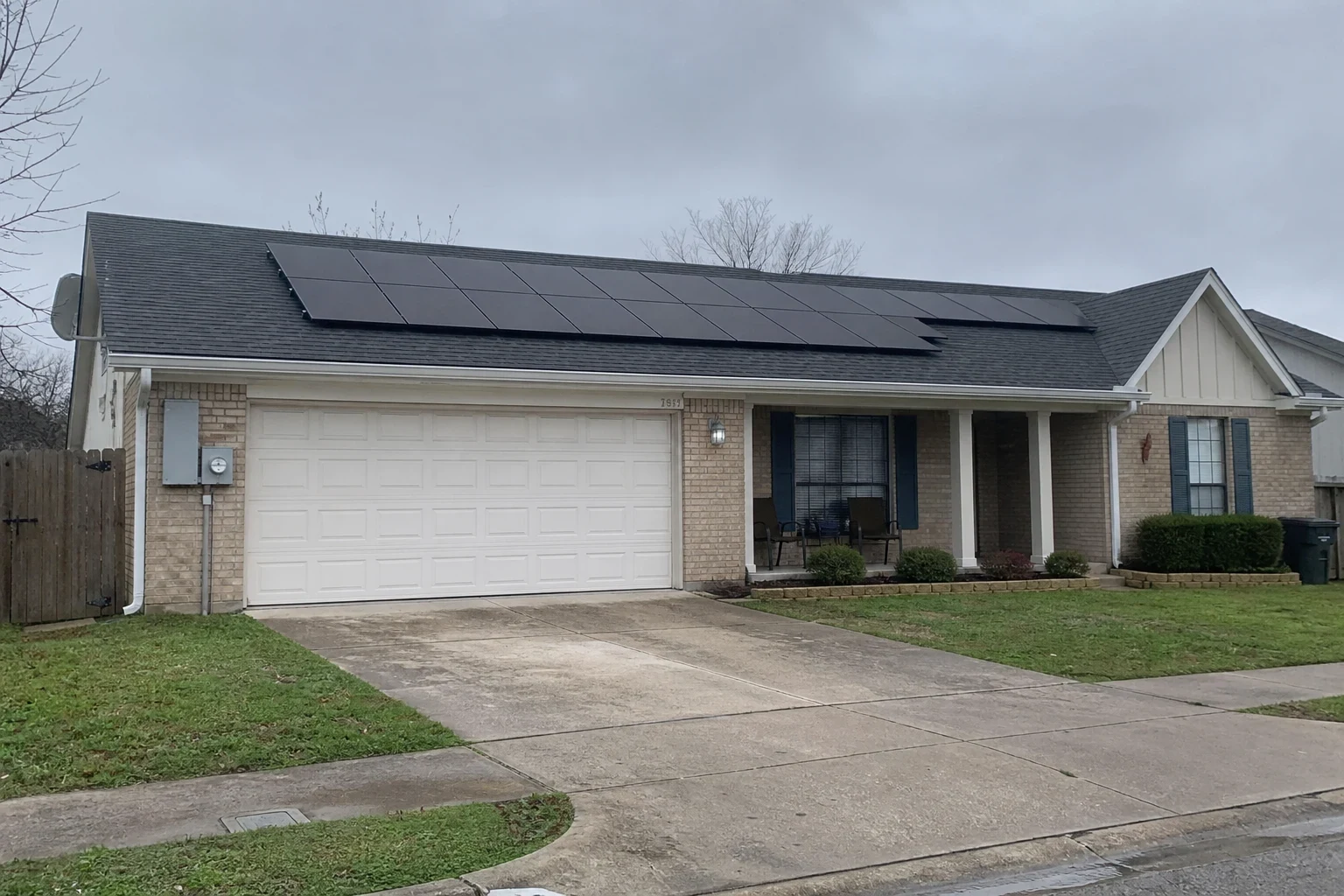
We are based in Hurst, TX and serve homeowners across the surrounding area, including North Richland Hills, Euless, Bedford, Haltom City, Colleyville, Watauga, Richland Hills, Arlington, Grapevine and Keller. The same inspection and documentation process applies whether we are planning new solar panel installation, adding battery storage or tracking down a fault on an older roof-mounted solar array.
- Hurst
- North Richland Hills
- Euless
- Bedford
- Haltom City
- Colleyville
- Watauga
- Richland Hills
- Arlington
- Grapevine
- Keller
Talk Through Your System With Us
Tell us what you are seeing, whether that is a drop in production, an inverter error code or damage after a storm. We will explain what we would check first and how a visit to your home would run.