ServicesBattery Storage
Battery Storage in Hurst, TX
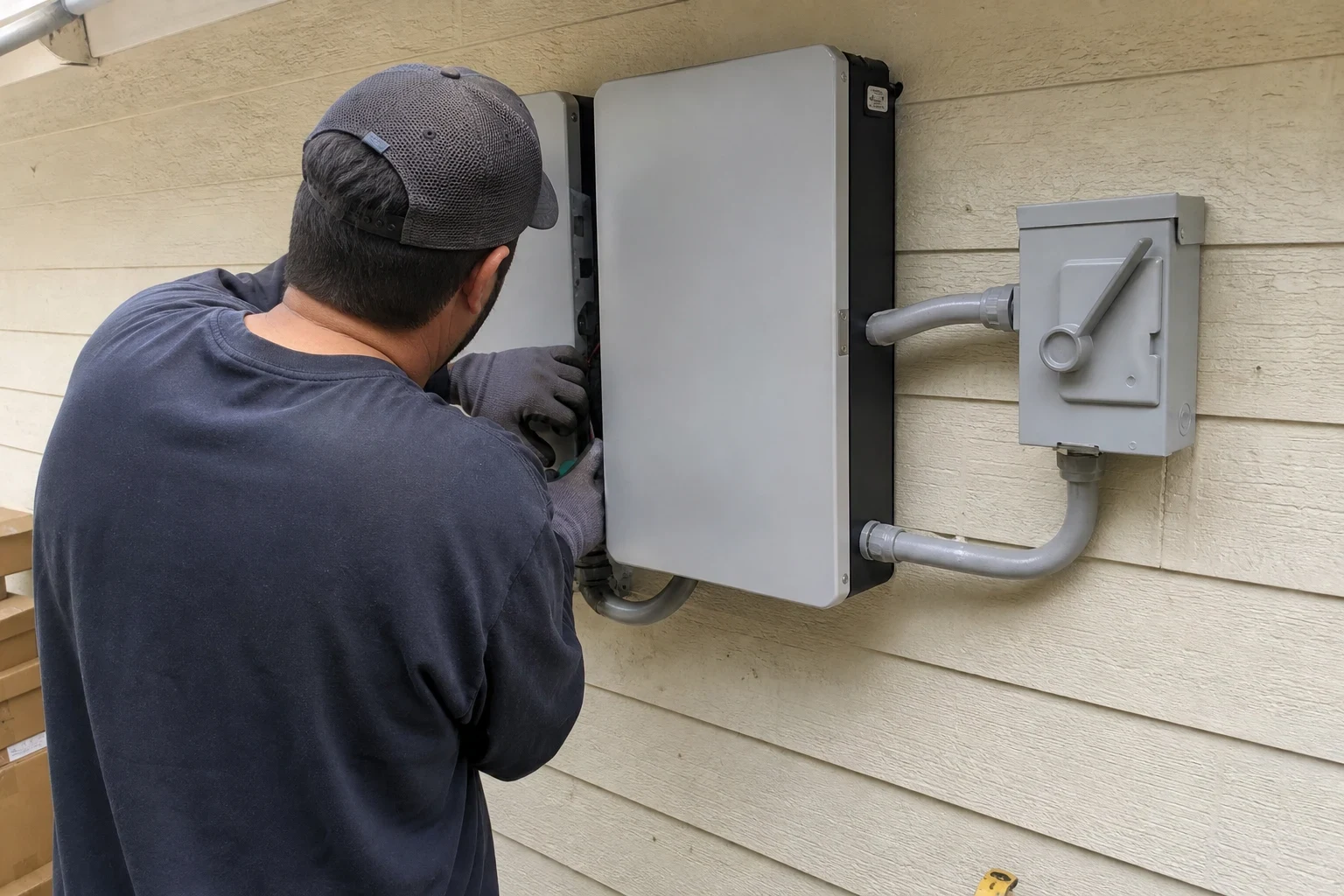
A home battery stores solar power you would otherwise sell back cheap, and it keeps chosen circuits running when the grid drops. We size it from your real loads, mount it where heat won't shorten its life, and wire it to current electrical and fire code.
What a Home Battery Actually Does
A battery system has three working parts: the battery modules, an inverter that converts their DC power to the AC your home uses, and a gateway or transfer switch that disconnects your home from the grid during an outage. That last part matters. Without it, solar panels shut off when the grid goes down, by design, to protect line workers.
Texas has no statewide net metering rule, so what your retail electric provider pays for exported solar can be well below what you pay for power at night. A battery lets you store the midday surplus and use it after sunset instead. For many households that shift, plus outage backup, is the real reason to add storage.
It is the right call when you already have solar or are adding it, when outages cost you something real, like a well pump, medical equipment or a home office, or when your buyback rate makes exporting power a poor deal. If none of those apply, we will tell you so on the call.
What Our Battery Installation Includes
- Load review
- We go through the circuits you want backed up and estimate their draw, including the startup surge of motors like a well pump or refrigerator compressor. Surge, not average draw, is what usually decides inverter size.
- Battery and inverter selection
- We work with lithium iron phosphate chemistry, which tolerates heat better and is more resistant to thermal runaway than older lithium types. We match AC-coupled or DC-coupled designs to the solar equipment you already have.
- Critical loads panel or whole-home gateway
- Partial backup moves selected breakers into a separate subpanel. Whole-home backup uses a gateway at the main service. We explain the tradeoff in battery capacity before you choose.
- Mounting and clearances
- Batteries go on a shaded exterior wall or in a garage, with the spacing, bollard protection and labeling the fire code requires. We keep units out of direct afternoon sun where possible, since sustained heat speeds up cell aging.
- Permits and utility paperwork
- We pull the city electrical permit, schedule the inspection and file the interconnection update with your utility so the system is on record correctly.
- Setup and walkthrough
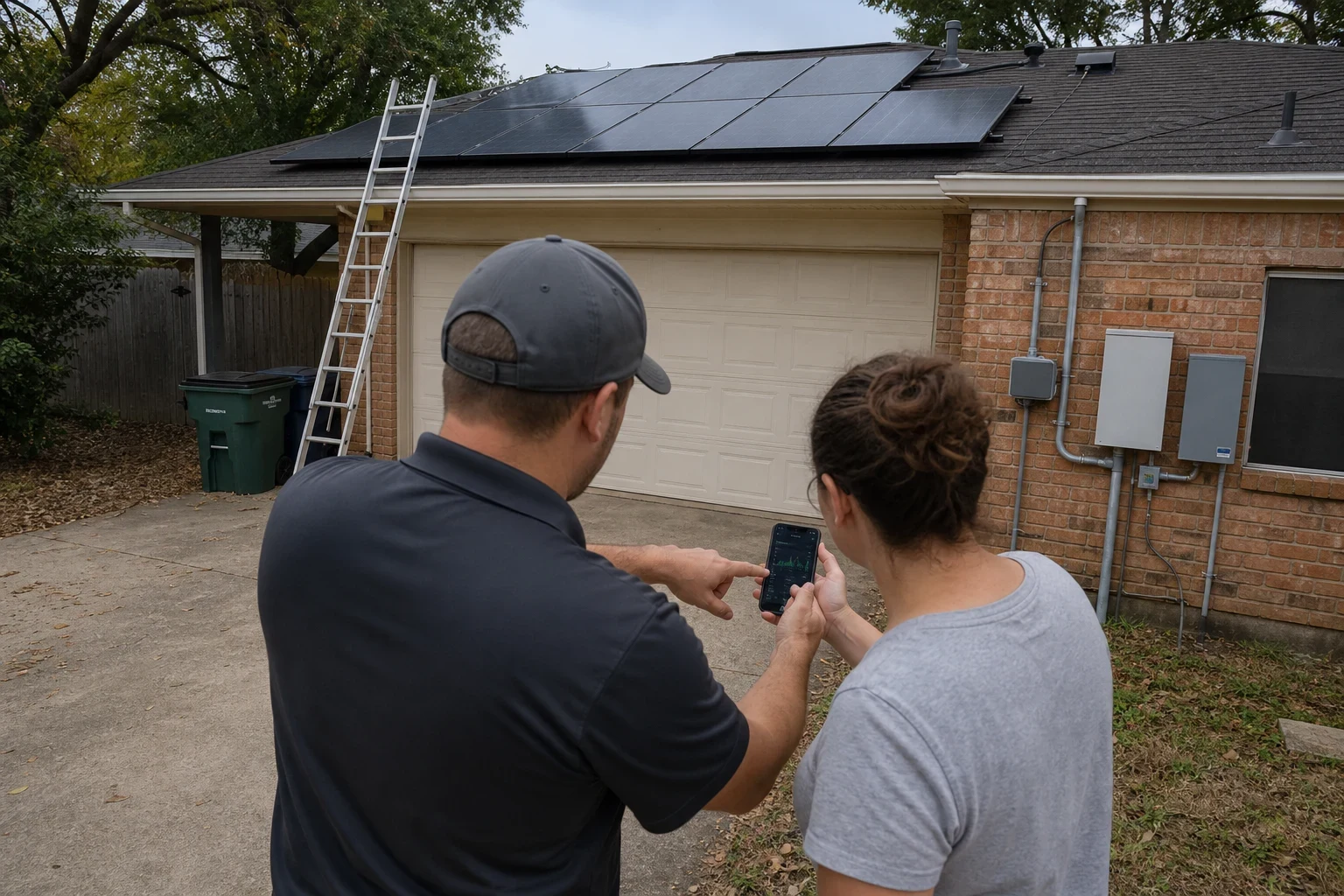
- We set the operating mode, reserve level and app monitoring, then show you how to read state of charge and what happens during an outage.
Signs a Battery Makes Sense for Your Home
Your solar goes dark in outages
Grid-tied inverters shut down when utility power fails. If you were surprised to lose power with panels on the roof, a battery and gateway are the missing pieces.
Your buyback credit is low
Check your bill for the export rate. When it is a fraction of your purchase rate, storing that power is worth more than selling it.
Something in your home can't go without power
Refrigerated medication, a CPAP machine, a sump or well pump, or work-from-home equipment all justify backing up a dedicated set of circuits.
You run heavy loads in the evening
Summer evenings bring peak air conditioner use just as solar output fades. A battery can carry part of that load from stored daytime power.
Your existing battery is losing capacity
If an older battery no longer lasts through the evening or throws fault codes, it may need diagnosis, firmware updates or replacement. Our solar repair work covers the rest of the system.
How a Battery Job Runs
- 1
Phone conversation and site visit
We start by phone to learn what you want backed up. Then we look at your main panel, service size, solar inverter and wall space, and photograph the equipment labels.
- 2
Written design and estimate
You get a line-item estimate showing battery capacity, inverter, gateway, wiring and permit costs, plus a plain-language list of the circuits that will stay on.
- 3
Permit and approval
Our team handles the permit plans with the city and the notice to your utility, so there is no paperwork on your end. Installation is scheduled once the permit is issued.
- 4
Installation day
Most residential battery installs take a single day. Power to your home is shut off for a few hours while we tie into the main panel, and we tell you the window ahead of time.
- 5
Inspection and commissioning
After the city inspector signs off, we power up, test a simulated outage with you present and confirm the system switches over cleanly.
What Moves the Cost of Battery Storage
Battery pricing depends far more on what you want it to do than on the box itself. Two homes on the same street can need very different systems. Your estimate breaks out each part so you can see where the money goes and adjust scope.
- Storage capacity
- Capacity is measured in kilowatt-hours. Backing up a refrigerator, lights and internet for a night needs far less than running central air through an outage.
- Partial or whole-home backup
- A critical loads subpanel costs less in hardware but requires moving circuits. Whole-home gateways cost more and may need added batteries to handle larger loads.
- Your existing electrical service
- An older or full main panel may need an upgrade or a main breaker derate to accept the battery's backfeed. We check this on the site visit, not after.
- Coupling with your solar
- Adding storage to an existing system usually means AC coupling with its own inverter. A new solar install can use a hybrid inverter that handles both.
- Mounting location and wire runs
- Long conduit runs from the battery to the main panel, or mounting that needs protective bollards, add labor and material.
Questions About Home Batteries
Something not covered here? (817) 631-6036
How long can a battery power my home in an outage?
That depends on the load. A battery covering only essential circuits can often get through the night and refill from solar the next day, while central air drains it much faster. We estimate the hours from the loads you pick, not from a best-case figure.
Will a battery work with my current solar?
In most cases, yes. Existing systems can usually be AC-coupled, where the battery has its own inverter and ties in at your panel. Before recommending a setup, we check your inverter model and panel capacity.
Is Texas heat bad for home batteries?
Long spells of high heat age cells faster and can cause a battery to cut its output to protect itself. For that reason we prefer lithium iron phosphate cells and pick shaded walls or ventilated garages instead of sunny spots.
Does my homeowners insurance need to know about a battery?
Yes. Contact your agent before or soon after the install so the equipment is on your policy. Terms differ between insurers, and we can supply the equipment specs and permit records they may request.
What happens if a storm damages my battery or inverter?
We inspect the system, photograph the damage and the equipment labels, and write down what failed and what fixing or replacing it takes. You get clear records to give your insurer. The adjuster decides coverage, and we will not guess what a claim will pay.
Do you put in batteries beyond Hurst?
Yes. We install home batteries in North Richland Hills, Euless, Bedford, Colleyville, Keller and the other nearby towns on our Service Areas page.
Find Out What Size Battery Your Home Needs
Tell us which circuits matter to you and what solar equipment you have. We will explain the options and the next steps for a site visit.