ServicesSolar Panel Installation
Solar Panel Installation in Hurst, TX
We design a solar system around twelve months of your electric bills and the real shade on your roof, then mount, wire and inspect it to code. You get a written breakdown of panels, inverters and racking before any work starts.
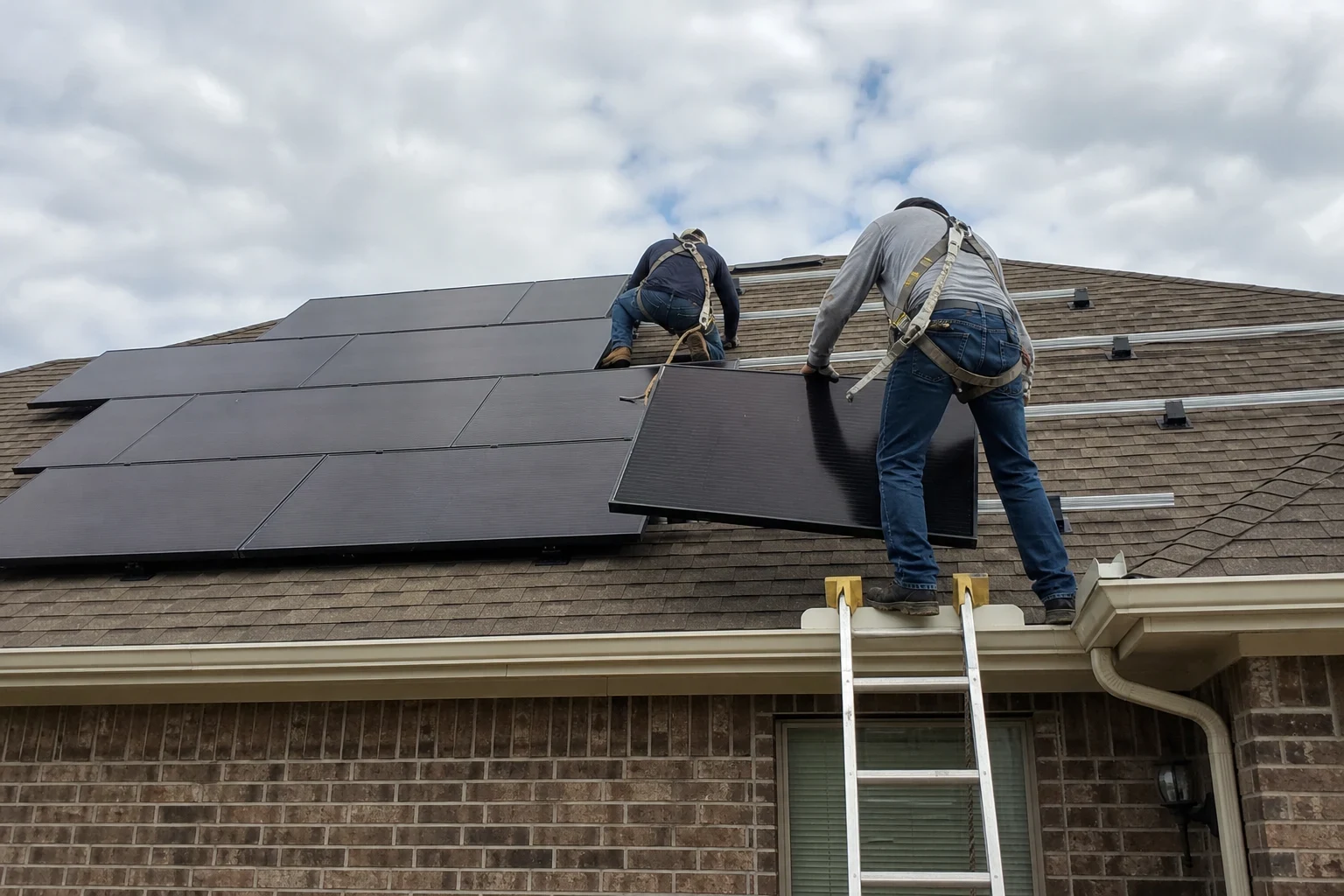
What a Solar Installation Actually Involves
A solar installation is more than panels on a roof. It is racking anchored into rafters, flashing that keeps water out of every penetration, inverters that turn DC into usable AC, and an interconnection that lets your home trade power with the grid. Each part has to be matched to the others or the system underproduces.
We start with your usage, not a stock package. A household that runs two refrigerators and a pool pump needs a different array than one that mostly cools a few rooms in summer. We size to the load you have and show you the math.
Before we mount anything, we photograph the roof surface, decking edges and attic side of the rafters. That record helps you later if a hailstorm hits and you need to show your insurer what the roof and array looked like on install day.
What the Installation Includes
- Usage review and system sizing
- We read twelve months of kWh usage and model production by roof face, tilt and azimuth. You see the expected annual output and how it compares to what you use.
- Shade and roof assessment
- We check trees, chimneys and vent stacks that cast shade across the day. If the roof covering is near the end of its life, we tell you before installing, because removing and resetting an array later adds cost.
- Racking and flashed attachments
- Rails mount to L-feet lagged into rafters, not just decking. Every attachment gets flashing and sealant rated for the roof material so penetrations stay dry.
- Inverters and rapid shutdown
- We spec microinverters, a string inverter or optimizers depending on shade and layout. Every system includes rapid shutdown so firefighters can de-energize the array at the roof.
- Permits, inspection and utility approval
- We pull the building and electrical permits, meet the inspector and file the interconnection paperwork so the system can be turned on legally.
- Install-day documentation
- You get dated photos of the roof, attachments, conduit runs and equipment labels. Keep them with your homeowner's policy records.
Signs Solar Is the Right Call for Your Home
Summer bills dominate your year
If July and August bills run far higher than spring ones, solar production peaks right when your air conditioning load does.
An open south or west roof face
A largely unshaded south-facing roof produces the most energy. West-facing faces also work well for late-afternoon cooling loads.
A roof with years left on it
Panels typically outlast a worn roof covering. A roof in good shape means the array can stay put for a long run.
You plan to stay a while
Solar pays back over years of production. If you expect to remain in your home, the savings have time to add up.
You want backup later
Choosing a battery-ready inverter now makes adding Battery Storage simpler down the road.
How Your Installation Runs
- 1
Phone consultation and bill review
We talk through your usage, roof and goals, then schedule a site visit to measure and photograph the roof and electrical panel.
- 2
Design and written estimate
You get a layout, equipment list and line-item estimate. We explain why each component was chosen and what production to expect.
- 3
Permits and approvals
We take the plans through city permit review and handle the interconnection application with your utility. Work starts once the permit is issued.
- 4
Install day
Most residential arrays go up in one to three days. We set attachments, run rails, mount panels, pull conduit to the inverter and main panel, and clean up the yard and driveway each day.
- 5
Inspection and turn-on
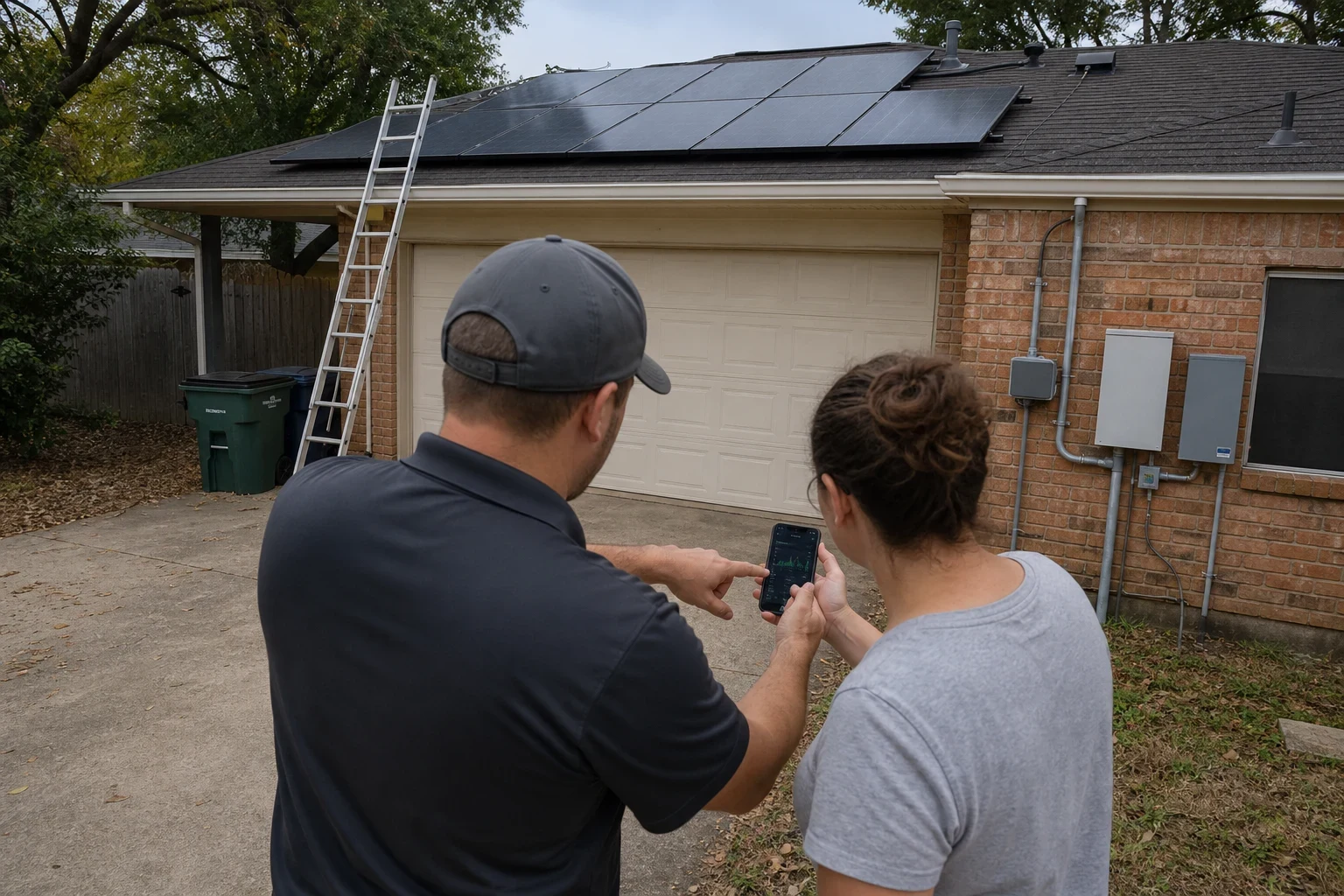
After the city inspection passes and the utility approves interconnection, we commission the system and show you how to read the monitoring app.
What Moves the Cost of a Solar Installation
Price is driven mostly by system size and the work needed to mount and connect it. We list each piece on the estimate so you can see where the money goes. If something changes after the site visit, we explain it before any work continues.
- System size in kilowatts
- More panels mean more modules, rails, attachments and labor. Size follows your usage and how much of it you want to offset.
- Inverter type
- Microinverters and optimizers cost more than a single string inverter but handle shade and mixed roof faces better.
- Roof layout and material
- Steep pitches, multiple small faces and tile roofs take more time and specialized mounts than a simple composition shingle roof.
- Electrical panel capacity
- An older or full main panel may need an upgrade or a line-side tap to accept solar backfeed safely.
- Battery readiness
- Adding battery storage at install, or preparing for it, changes the inverter and wiring choices.
Solar Installation Questions
Something not covered here? (817) 631-6036
Will panels make my roof leak?
They should not when attachments are lagged into rafters and flashed correctly. Every penetration gets a flashing boot and sealant matched to the roof material. We photograph each one before panels cover it so there is a record.
What happens if hail damages the panels?
Most modules are tested against hail impact, but a severe storm can still crack glass. Panels attached to your home are often covered under a homeowner's policy, though that depends on your policy. We can inspect, document the damage with photos and explain the claim steps; your adjuster makes the coverage decision.
Should I tell my insurance company I added solar?
Yes. Call your agent once the system is installed so the added value is on your policy. Our install photos and equipment list give them what they usually ask for.
Do you install on any roof?
We install on composition shingle, metal and tile roofs in sound condition. If the roof needs work first, we tell you so you can have it handled before the array goes on, since we do not do roofing ourselves.
How long until the system is producing?
Install day itself is short. Most of the timeline is permit review, inspection and utility approval, which we track and keep you updated on.
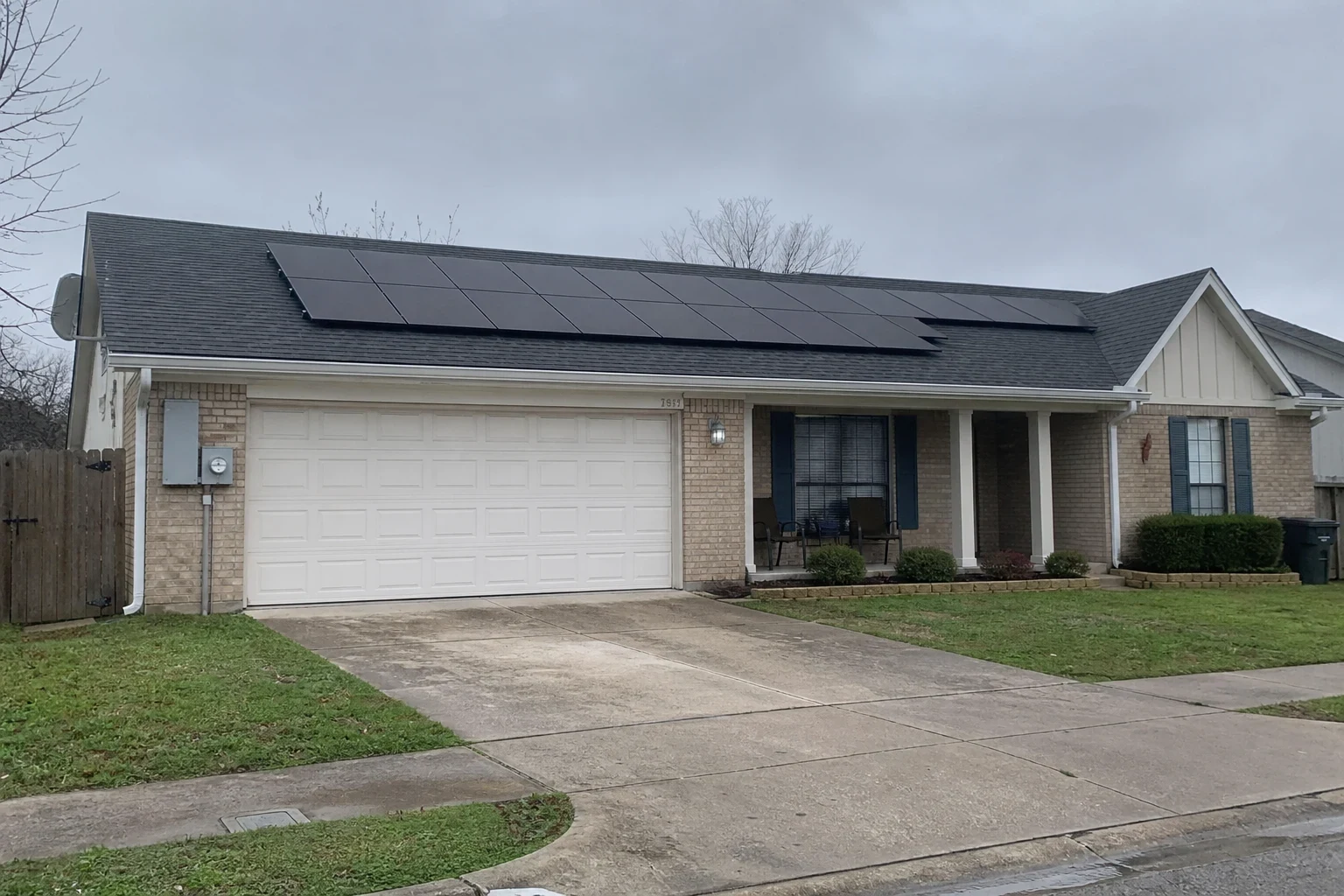
Find Out What Solar Would Do for Your Home
Have a recent electric bill handy and we will go over usage, roof orientation and next steps. We serve Hurst and nearby towns like Bedford, Euless and North Richland Hills.