ServicesRoof-Mounted Solar
Roof-Mounted Solar in Hurst
We mount solar arrays on your home's roof with every attachment lagged into a rafter and flashed under the shingles. You get a layout drawn around your actual roof planes, a permitted electrical install, and clear answers about how the system holds up to hail and wind.
What roof-mounted solar involves and when it fits
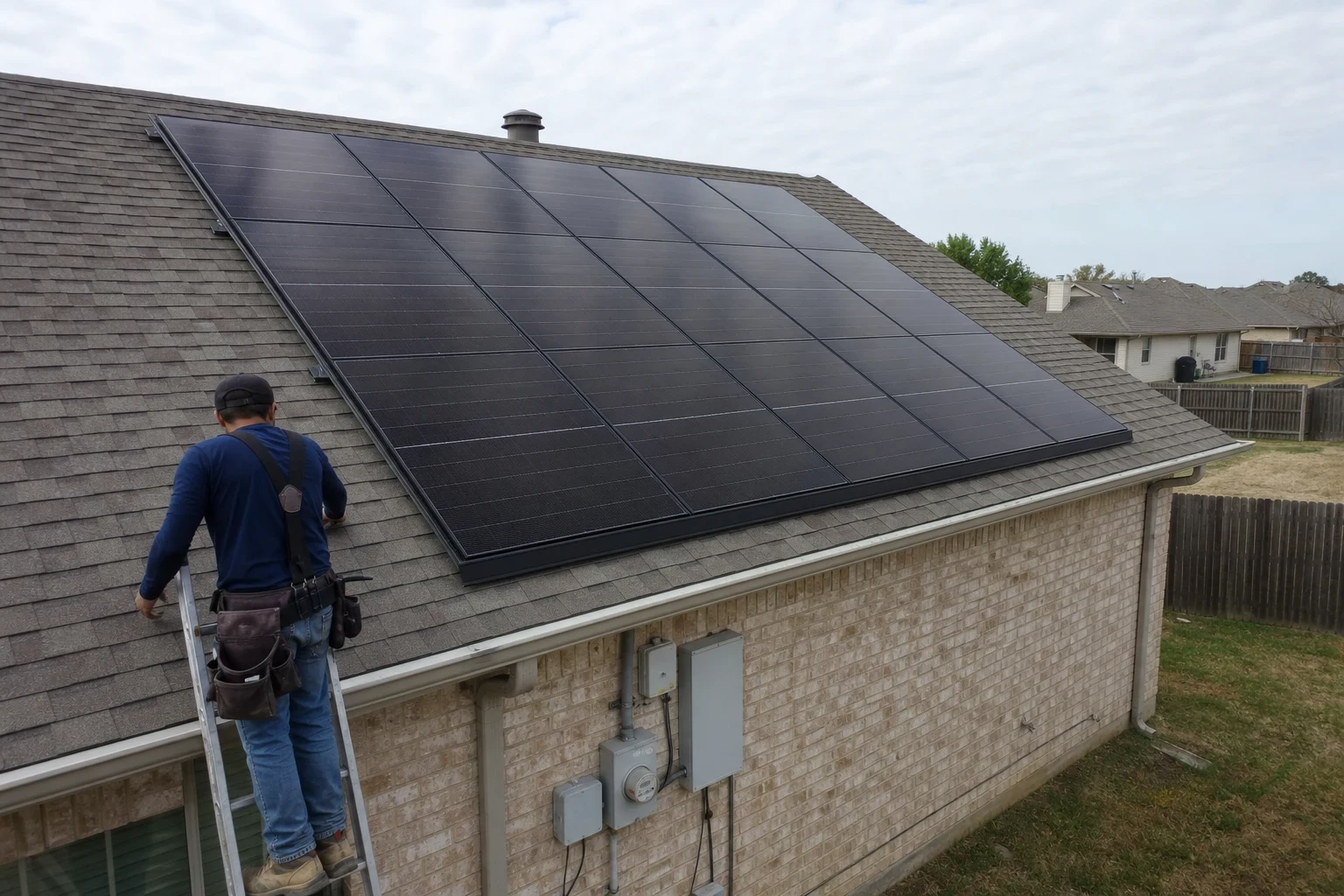
Most homes put solar on the roof because it is already there: no trenching, no ground space given up, and the panels sit above most yard shade. The array rides on aluminum rails, and the rails sit on attachments bolted through the decking into the rafters. How well those attachments are placed and sealed decides whether the roof stays dry for the life of the system.
It is the right call when you have a south, west or east roof plane with limited shade and a roof surface with plenty of life left. If your shingles are near the end of their run, we will tell you before we design anything, because removing and reinstalling an array later adds real cost. Our solar panel installation page covers equipment choices. This page is about the roof side of the job.
Around Hurst, spring hail is part of owning a roof. We photograph the roof and the finished array so you have a clear before-and-after record if you ever need to file a claim.
What the roof-mount work includes
Rafter location and attachment layout
We find rafters from the attic or with a stud finder and mark them before drilling. Each L-foot or mount is lagged into solid framing, not just the decking, so wind uplift loads go into the structure.
Flashed, sealed penetrations
Every attachment gets a metal or composite flashing slid under the course of shingles above it, plus sealant rated for roof use. Water sheds over the flashing instead of relying on caulk alone.
Racking and grounding
Rails are leveled so the panels sit in a flat plane, and each module is tied electrically to the racking with listed grounding clips. The whole array is grounded back to your electrical system as the code requires.
Wire management and roof conduit
Module leads are clipped to the rails, off the shingles, where they will not rub or sag. Conduit runs are kept short and neat, with a sealed roof entry or a run down the exterior wall.
Rapid shutdown equipment
Current code requires that rooftop conductors can be de-energized quickly for firefighter safety. We install microinverters, optimizers or a shutdown device that meets that rule.
Documentation for your files
You get photos of the attachments, flashing and wiring before the panels cover them. Those photos help later with repairs, a home sale or a hail claim.
Signs a roof-mounted array suits your home
- A roof plane that sees sun most of the day
- South-facing planes produce the most, but west and east planes still work well. If trees shade the roof only early or late, the array can still pay its way.
- High summer bills from air conditioning
- North Texas summers push cooling load hard in the afternoon. A west-leaning array produces strongly during those same hours.
- Shingles with years of life left
- A roof that is fairly new is the ideal base, since the panels will stay up for decades. An older roof is worth discussing before you commit.
- No yard space for a ground mount
- Most lots here do not have open, unshaded ground to spare. The roof keeps the yard free and puts the panels where shade is lightest.
- You want a record for future storm claims
- If you have been through a hail claim before, you know how much photos matter. A documented install gives you a clean starting point.
How a roof-mount job runs
- 1
Checking the roof and electrical
We review roof pitch, which way each plane faces, shade, and the state of the shingles and decking, along with your main electrical panel. In the attic, we confirm rafter size and spacing.
- 2
Design, permit and utility filing
We lay the array out around vents, valleys, skylights and the code's fire-access setbacks. Then we obtain the city permit and handle the utility's interconnection application for you.
- 3
Roof work on install day
The crew installs attachments, flashing and rails first, then sets and wires the panels. The ground under the work area is covered, and a magnet sweep picks up nails and offcuts before we go.
- 4
Inspection and switch-on
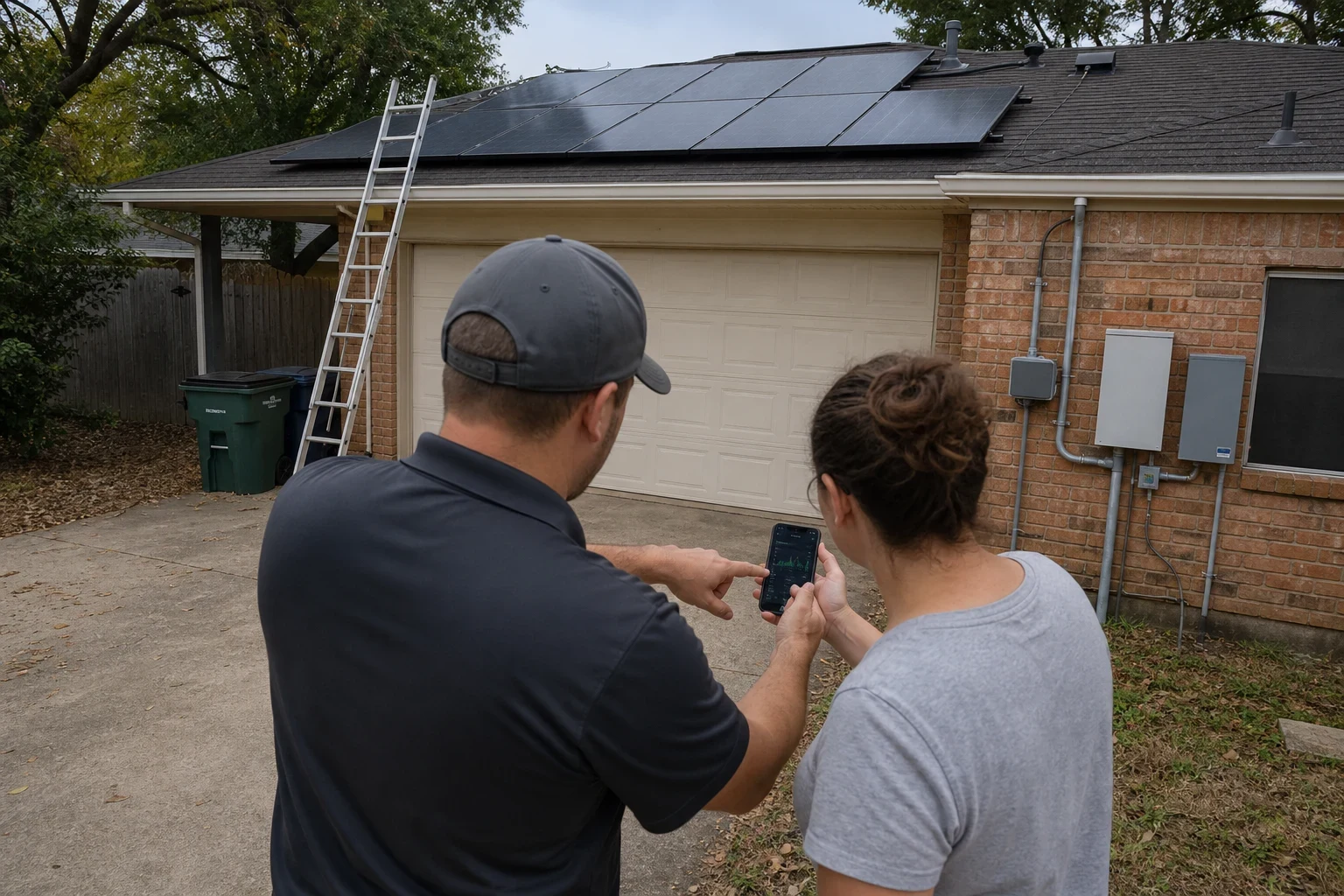
A city inspector reviews the structural and electrical work. Once the utility approves interconnection, we commission the system and show you how its monitoring works.
What moves the cost of roof-mounted solar
The panel count sets the base of the price, but the roof itself changes the labor more than most people expect. We give you a written, line-item estimate after the assessment so you can see where each part of the cost comes from.
- Roof pitch and height
- Steep or two-story roofs need more fall protection and slower, careful work. That adds labor hours.
- Roof surface
- Composition shingle is the most direct to mount on. Tile and standing-seam metal use different attachments, and tile needs careful handling to avoid cracked pieces.
- Number of roof planes
- One large plane is simpler than splitting the array across three smaller ones, each with its own rails and wiring runs.
- Electrical panel capacity
- An older or full main panel may need an upgrade or a supply-side connection before the system can tie in.
- Inverter and shutdown approach
- Microinverters, optimizers and string inverters differ in equipment cost and in how much work happens up on the roof.
Roof-mounted solar questions
- Will drilling into my roof cause leaks?
- A properly flashed attachment sheds water the same way your shingles do. The flashing slides under the course above it, so water runs over it instead of into the hole. We lag into rafters and seal each penetration, then photograph them before the panels go on.
- How do panels hold up to hail?
- Most modules use tempered glass tested against hail impact, and they often come through storms that damage the shingles around them. Very large hail can still crack glass. If a storm hits, our solar repair work can check the array and document what we find.
- Do you handle the insurance claim if hail damages the array?
- We do not act as your adjuster, and we cannot promise what a policy will cover. What we can do is inspect the array, photograph damage, write up what we found, and explain how the claim process usually works. Many homeowners find that record makes the adjuster visit go more smoothly.
- What happens if my roof needs work after the panels are up?
- The array can be removed and reinstalled so the roof can be serviced. It takes careful disconnection and a reinstall with new flashing. That is why we look closely at roof age before design.
- Does dust and pollen on the roof affect output?
- Yes, a dusty, pollen-coated array produces less, especially on low-pitch roofs where rain does not rinse it well. Our panel cleaning service uses soft brushes and purified water so the glass and coating are not scratched.
Find out how your roof would carry an array
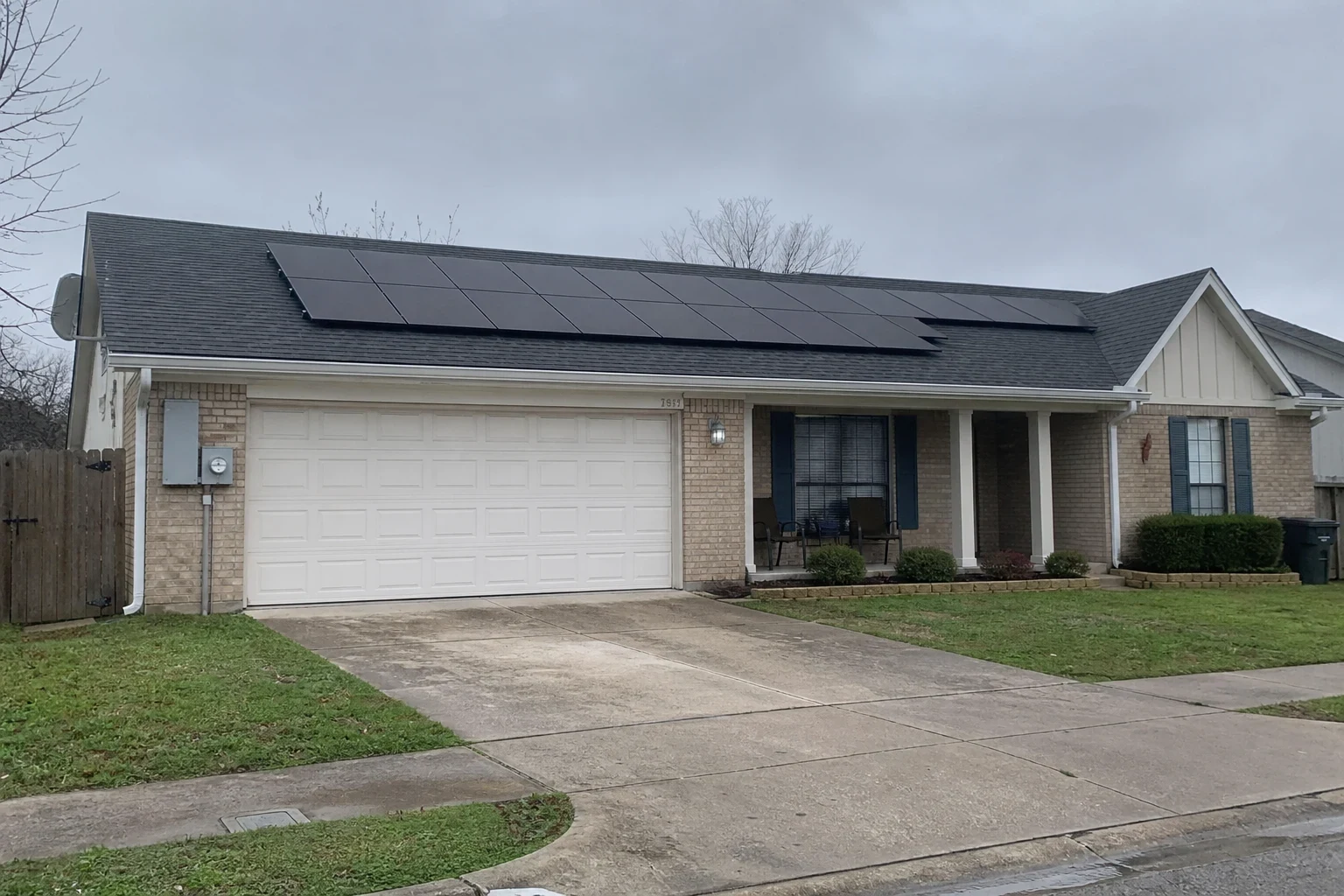
Tell us about your roof's age, surface and which way it faces. We will explain what the layout and install would look like, and whether any part of the roof needs attention first.