ServicesPanel Cleaning
Solar Panel Cleaning in Hurst
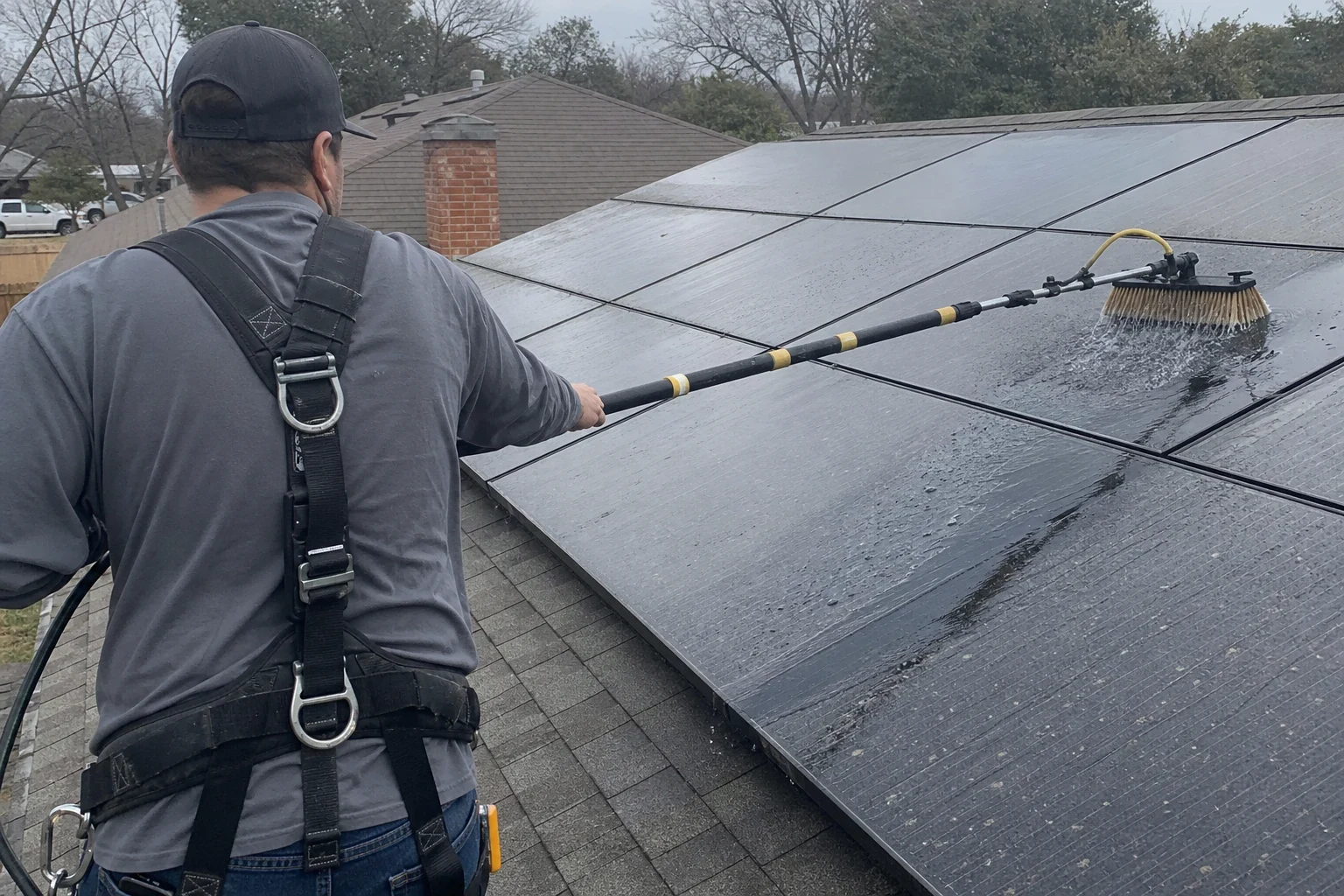
We wash your solar panels with purified water and soft brushes that protect the glass coating, then look over every module while we are up there. If we find cracks, hail marks or loose wiring, you get clear photos and a plain explanation.
Why Dirty Panels Make Less Power
A solar cell only makes power from the light that reaches it. Dust, pollen and bird droppings sit on the glass and block part of that light. Light, even dust lowers output a little across the whole array. A single dropping is worse, because it can shade one cell and force the module's bypass diode to route current around that section.
Rain helps less than most people expect. Panels at a low tilt hold water along the bottom frame edge, and when it dries it leaves a band of mud and minerals. In North Texas, long dry stretches and spring pollen build that film up faster than a shower can wash it away.
Cleaning makes sense when your monitoring app shows output slipping on clear days, or when you can see grime from the ground. It is also a good moment for a close look at the hardware, which is where most of our value comes in.
What Every Cleaning Visit Includes
Purified water rinse
We use deionized water, which has the dissolved minerals removed. Tap water leaves calcium spots that scatter light, so washing with a garden hose can trade one film for another.
Soft brush work, no pressure washer
Panel glass carries an anti-reflective coating. Pressure washers, abrasive pads and harsh detergents can wear it or force water past frame seals, so we use soft-bristle brushes and low-pressure water only.
Module-by-module visual check
With the glass clean, defects are easier to see. We look for cracked or chipped glass, brown discoloration, delamination, snail trails in the cells and loose or chafed wiring under the array.
Dated photos of anything we find
If something looks wrong, we photograph it with the date and its position on the array. Those photos help if you later need to file an insurance claim or a manufacturer warranty claim.
Care for the roof surface
We step only where the roof can take it and keep hoses and buckets off the shingles where we can. Rinse water is plain purified water, so there is no soap residue running into your gutters or landscaping.
Signs Your Panels Are Due for Cleaning
- Output drops on sunny days
- Compare a clear day this month with a clear day from a similar month last year in your monitoring app. A steady decline with no change in weather often points to soiling.
- Glass looks dull from the driveway
- Clean modules read dark blue or black from the ground. When yours look cloudy or washed out instead, enough grime has settled on the glass to cut into production.
- Bird droppings on the glass
- Droppings bake on in summer heat and shade individual cells. They rarely wash off in the rain.
- Mud line along the bottom edge
- A brown band where water pools against the frame means dirt is collecting faster than rain can clear it.
- After a hailstorm or high wind
- A cleaning after a storm lets us check the glass closely and document any impact damage while the date is still fresh.
How a Cleaning Visit Runs
- 1
Phone conversation first
You tell us how many panels you have, how tall the house is and what you have noticed. We explain what the visit involves and set a time.
- 2
Early start, cool glass
We work in the morning when possible. Spraying cool water on glass that has sat in afternoon sun can stress it, and cleaner water dries without spotting when the surface is not hot.
- 3
Wash, rinse and inspect
We brush each module, rinse it with purified water and check the glass, frame, clamps and visible wiring as we go.
- 4
Walkthrough of findings
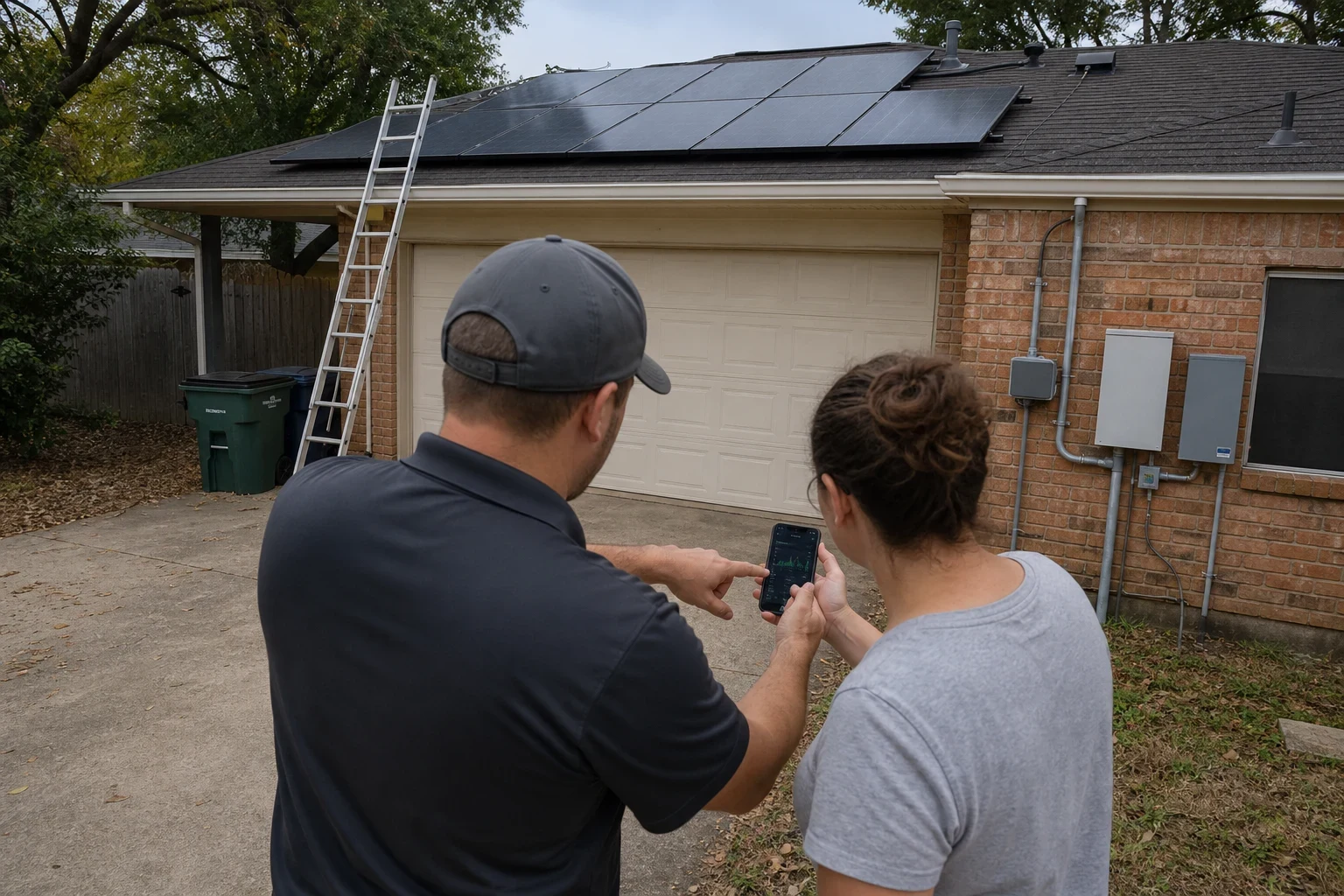
Before we leave, we show you the photos and tell you what we saw. If something needs attention, we explain whether it is cosmetic, a production issue or a safety issue.
What Moves the Price of a Cleaning
Pricing depends on the size of the job and how hard it is to reach the panels safely. We go over the factors on the phone and give you a clear figure before any work starts. Inspection photos are part of the visit, not an add-on.
- Number of panels
- More modules mean more brush time and more purified water.
- Roof height and pitch
- A two-story home or a steep roof needs more setup and fall protection than a single-story ranch with a gentle slope.
- How heavy the buildup is
- Baked-on droppings and a thick mineral line take extra passes compared with ordinary dust and pollen.
- Array layout
- Panels split across several roof faces take longer to reach and clean than one continuous block.
Questions About Panel Cleaning
- How often do my panels need a cleaning?
- Around Hurst, most homes need it once or twice a year, and late spring, once pollen season ends, is a popular time. If you live close to trees, fields or a busy road, you may need it more. Your monitoring data tells you best.
- Is a garden hose good enough?
- A rinse from the ground can move loose dust, but tap water spots the glass with minerals, and getting on a roof near live electrical gear is genuinely risky. Keep pressure washers and scrub pads away from the glass. If you do it yourself, a light morning rinse from the ground is the safest way.
- Does a cleaning put my panel warranty at risk?
- Many manufacturers publish care instructions that call for soft brushes and plain or mild water, and our method follows them. If you still have the warranty papers, the cleaning section is worth a read, and we can go through it with you.
- What if you spot hail damage while cleaning?
- We take photos, mark which panels are affected and tell you what we see. If you choose to file an insurance claim, we can explain the steps adjusters usually take. We are not your adjuster, and we cannot say what your policy will cover. Any repairs needed are handled through our solar repair service.
- How much will output go up after a cleaning?
- That comes down to how dirty the glass was. A thin coat of dust may change little, while heavy droppings or a thick mud line can change a lot. Compare a few clear days in your monitoring app before and after the visit to see your own numbers.
Have Your Panels Washed and Looked Over
Let us know what system you have and anything you have spotted. We will walk you through the visit and book a time that suits you.